
Math bingo
Math bingo cards turn operations, vocabulary, shapes, and number problems into a called game. Browse by topic and difficulty, then check whether players will hear a problem and mark an answer, or hear a term and find its match. Before playing, check each call, choose a manageable pace, and decide which familiar aids players may use. A round can test recognition and reasoning without making speed the only measure of success.
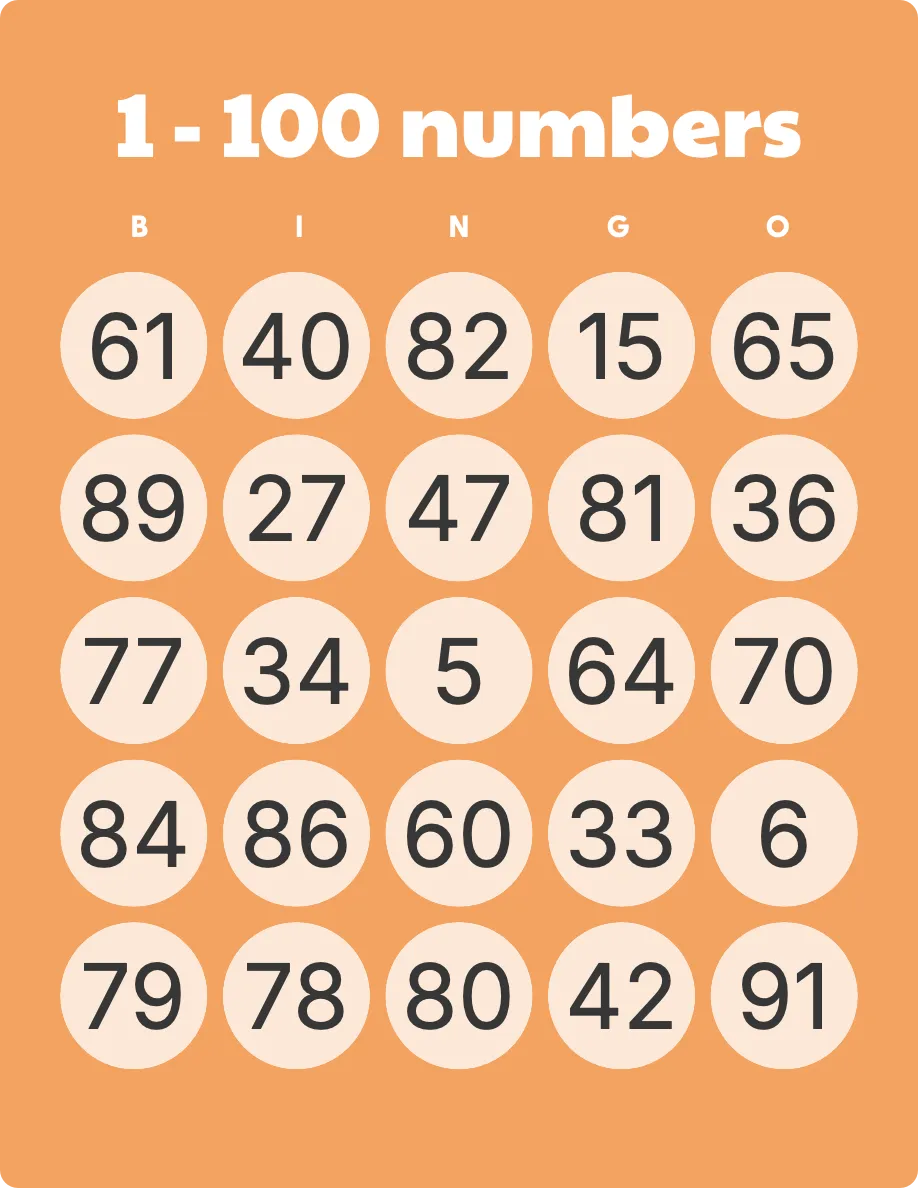
1 – 100 numbers bingo
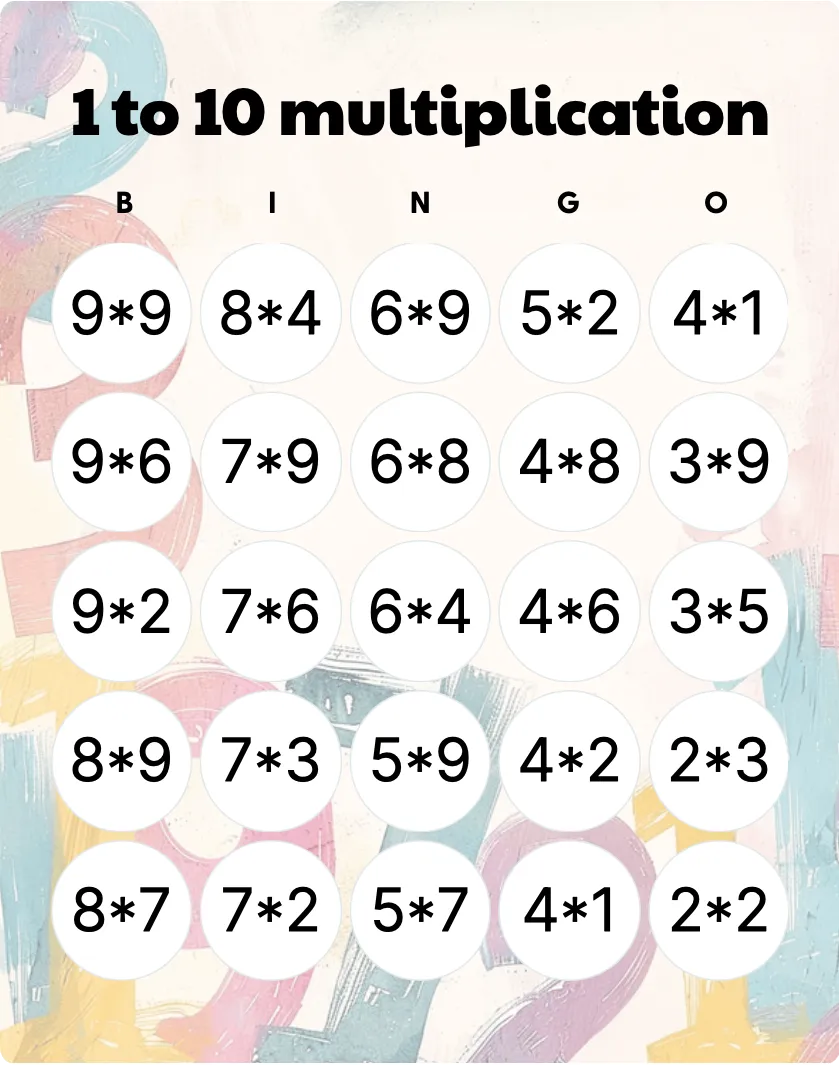
1 to 10 multiplication bingo
5+Intermediate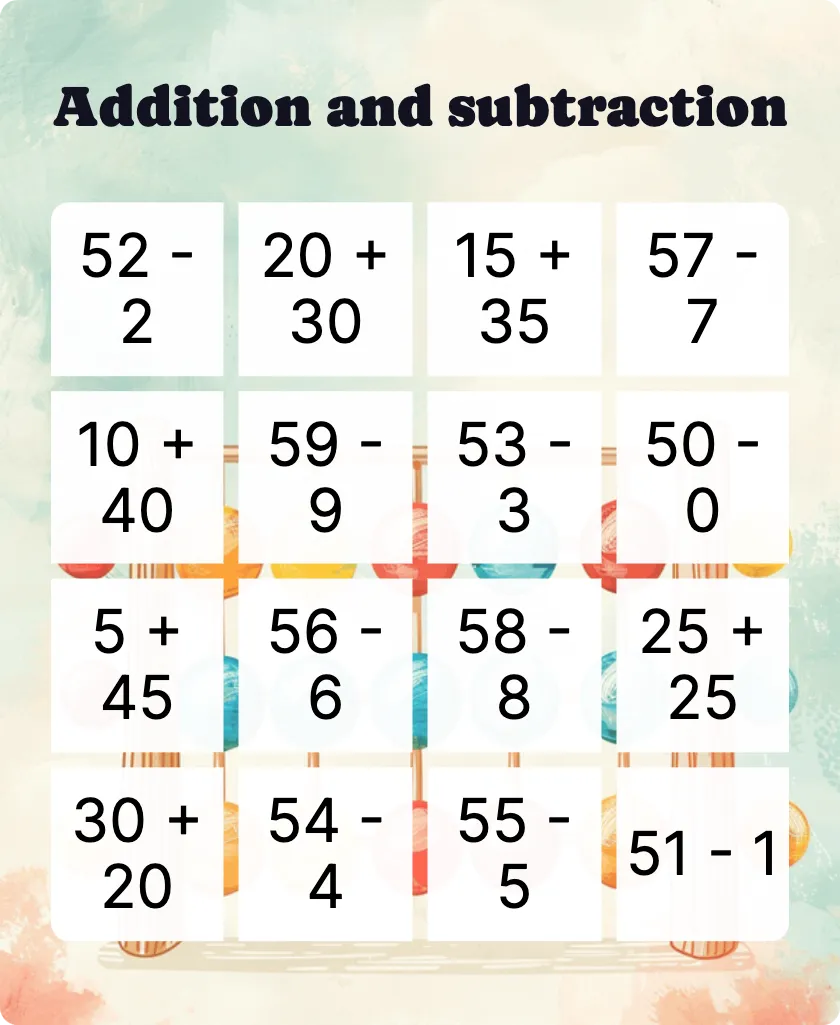
Addition and subtraction bingo
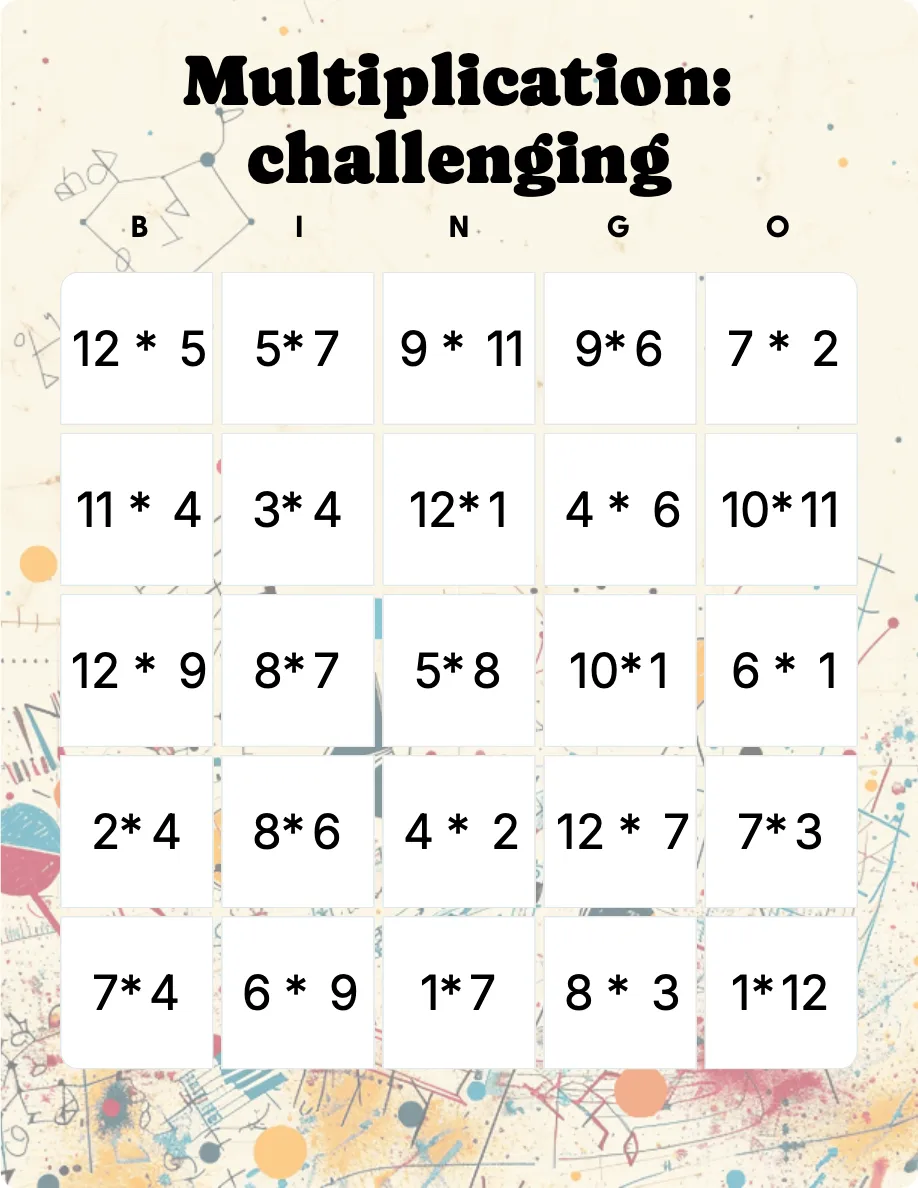
Multiplication: challenging bingo
12+Challenging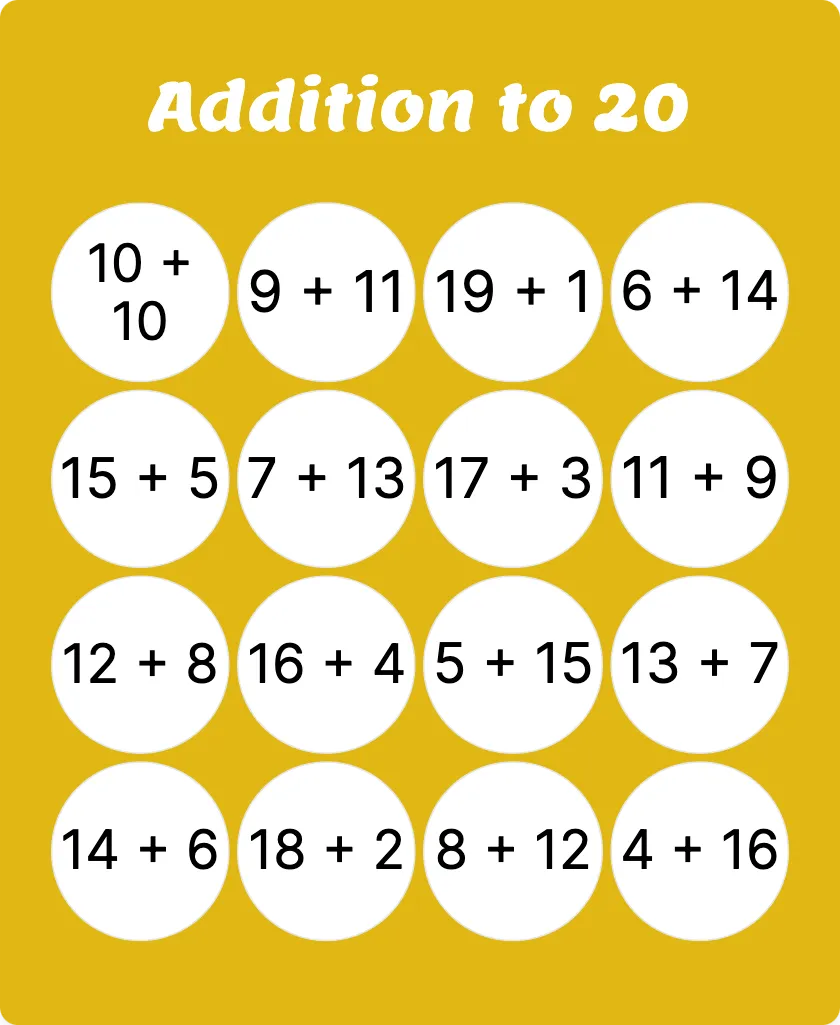
Addition to 20 bingo
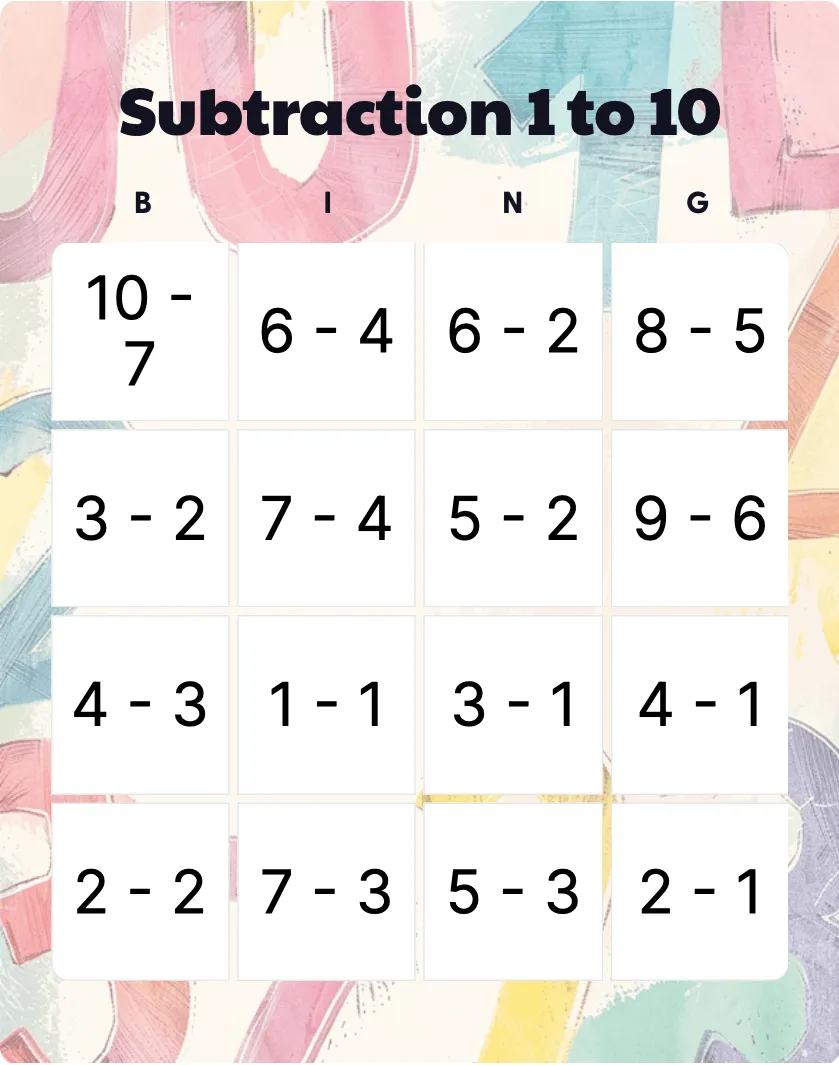
Subtraction 1 to 10 bingo
5+Easy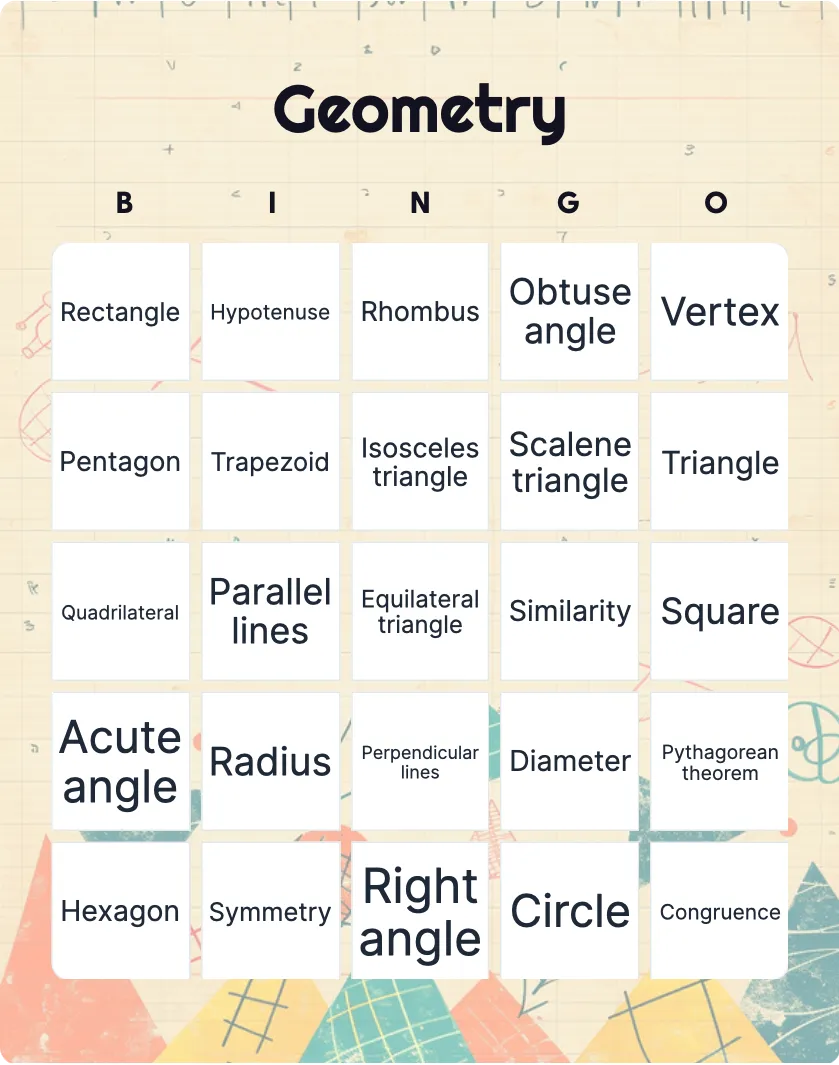
Geometry bingo
12+Intermediate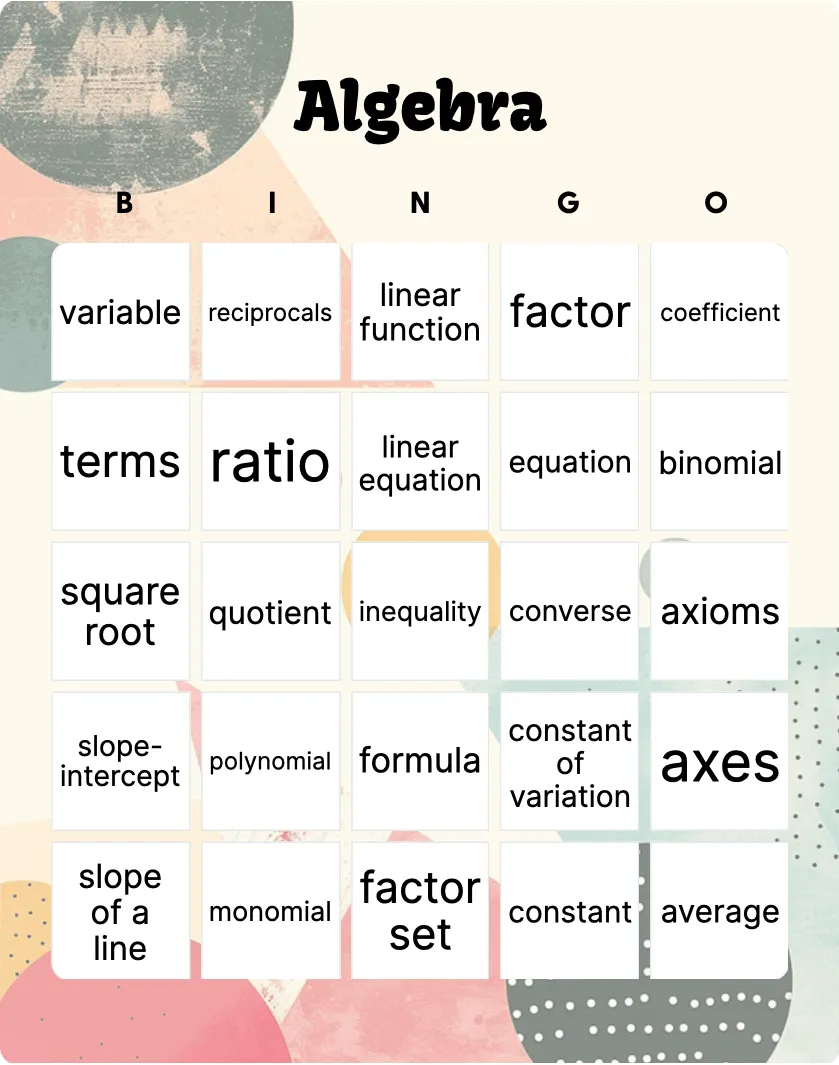
Algebra bingo
12+Challenging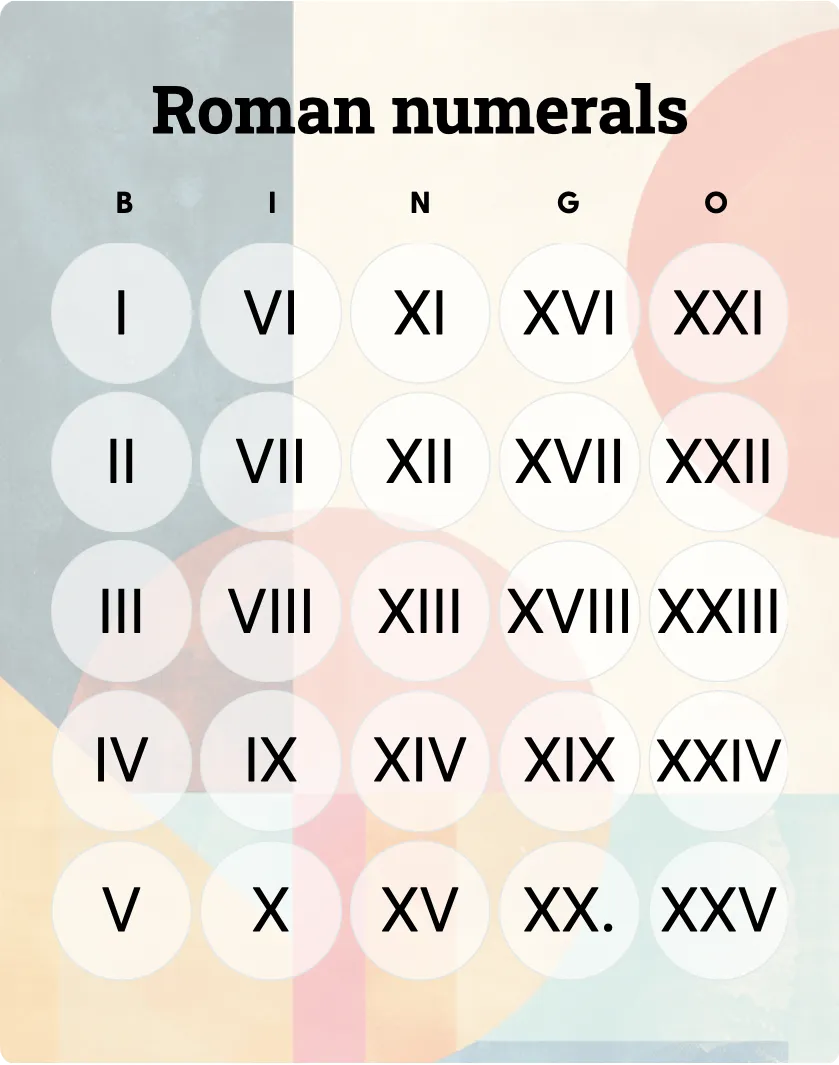
Roman numerals bingo
12+Challenging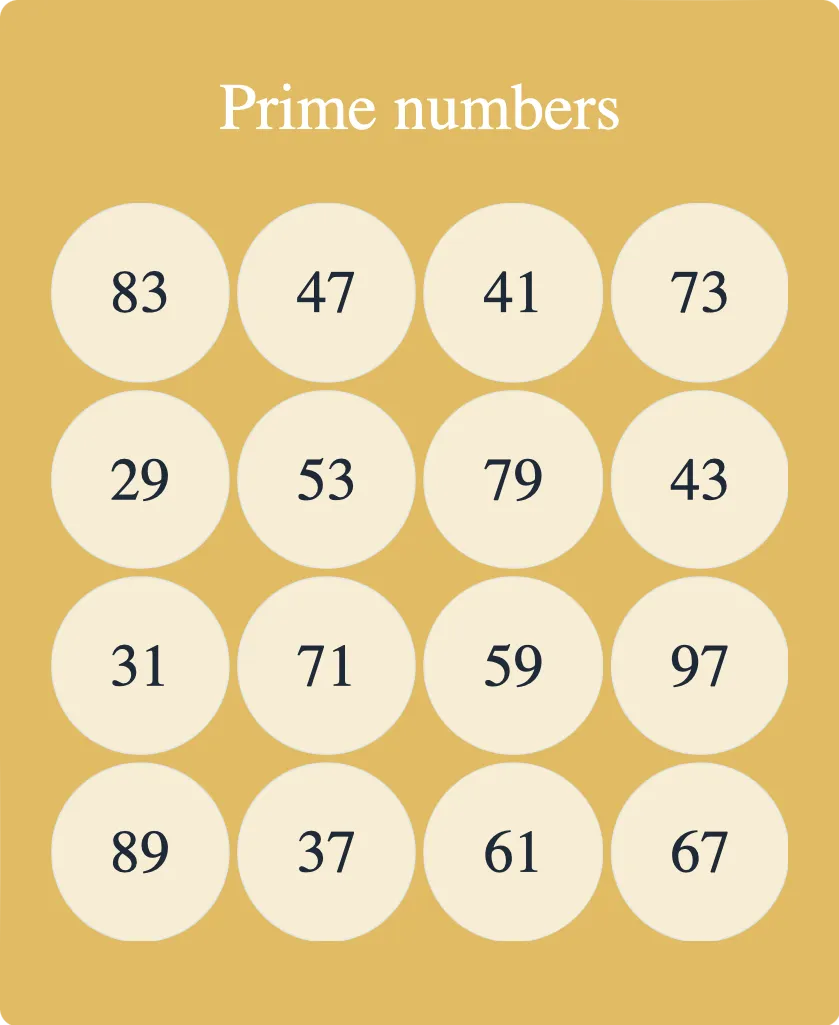
Prime numbers bingo
12+Challenging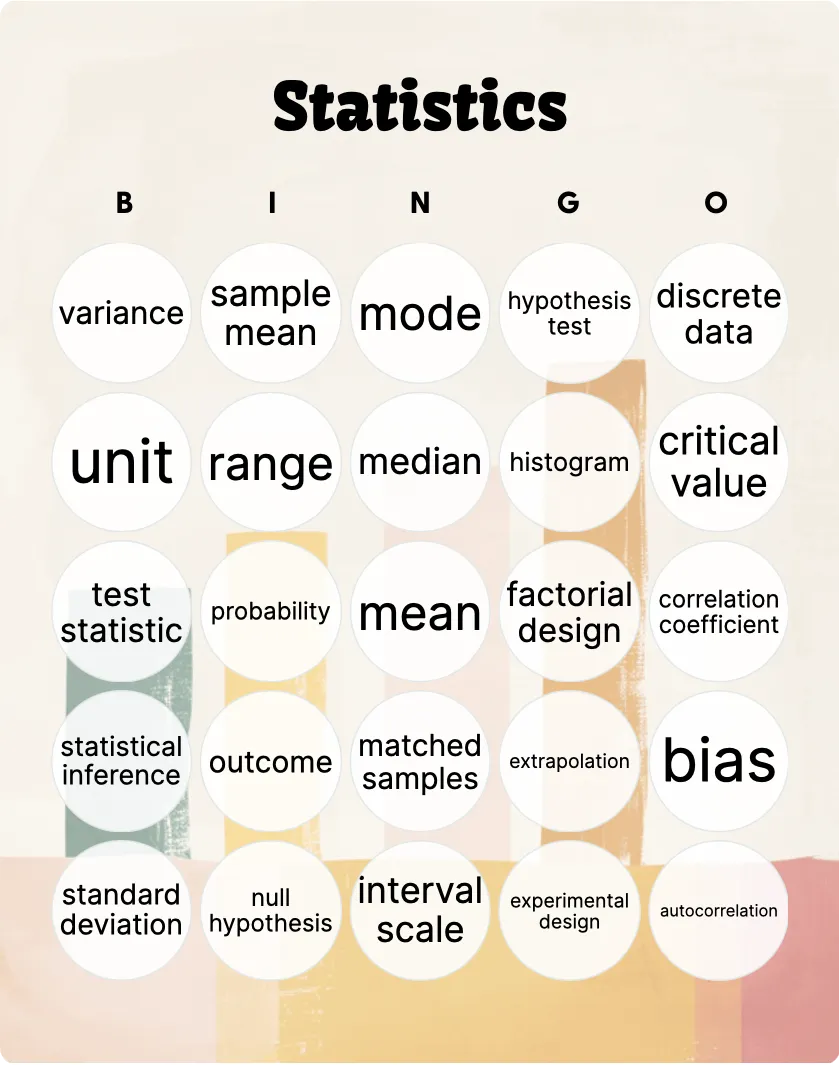
Statistics bingo
16+Intermediate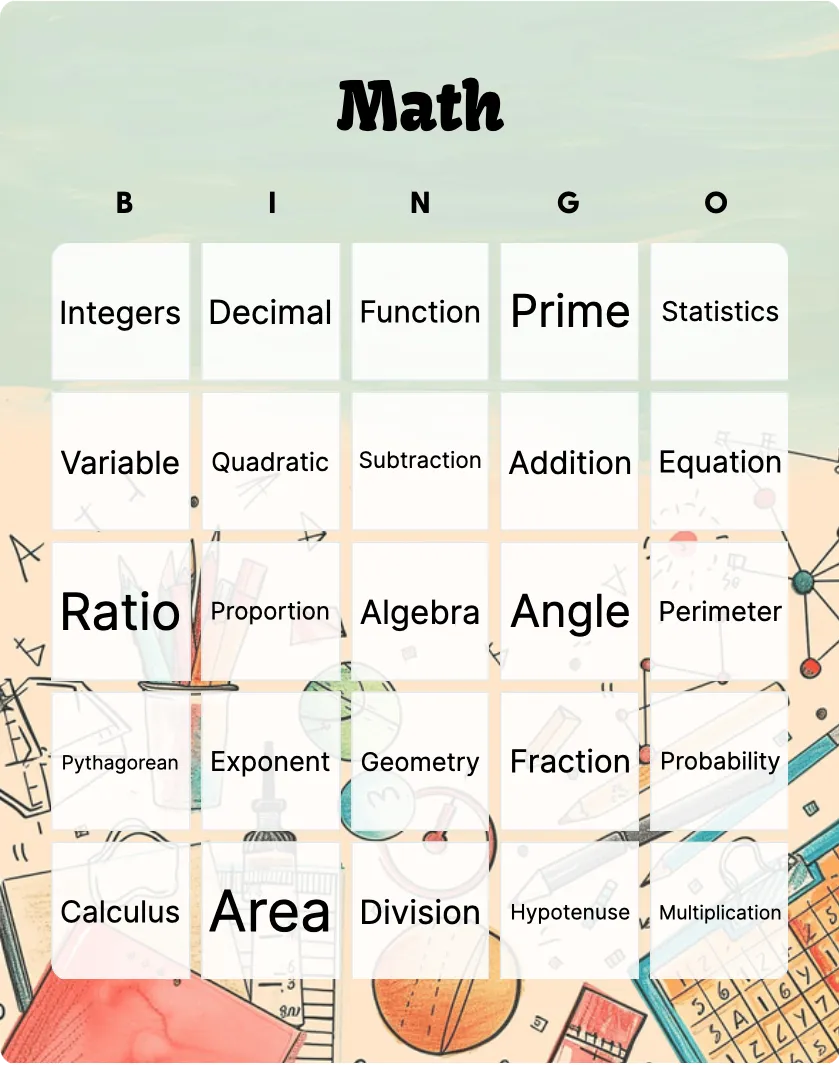
Math bingo
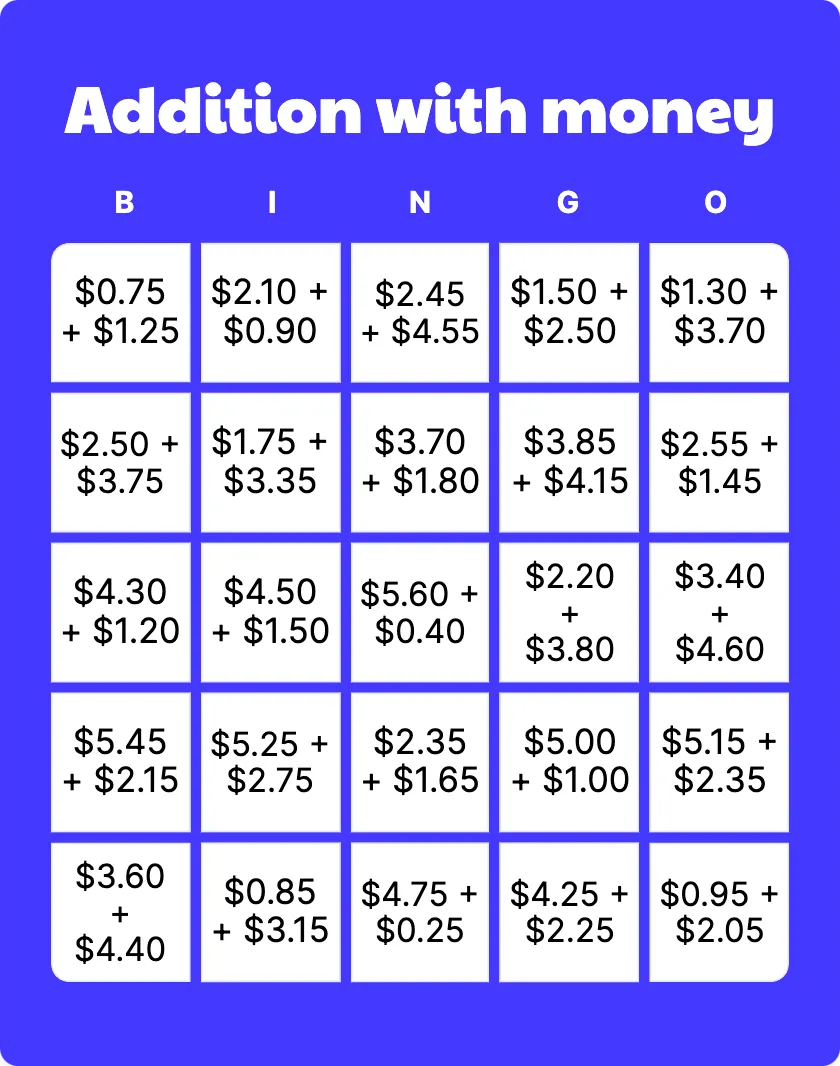
Addition with money bingo
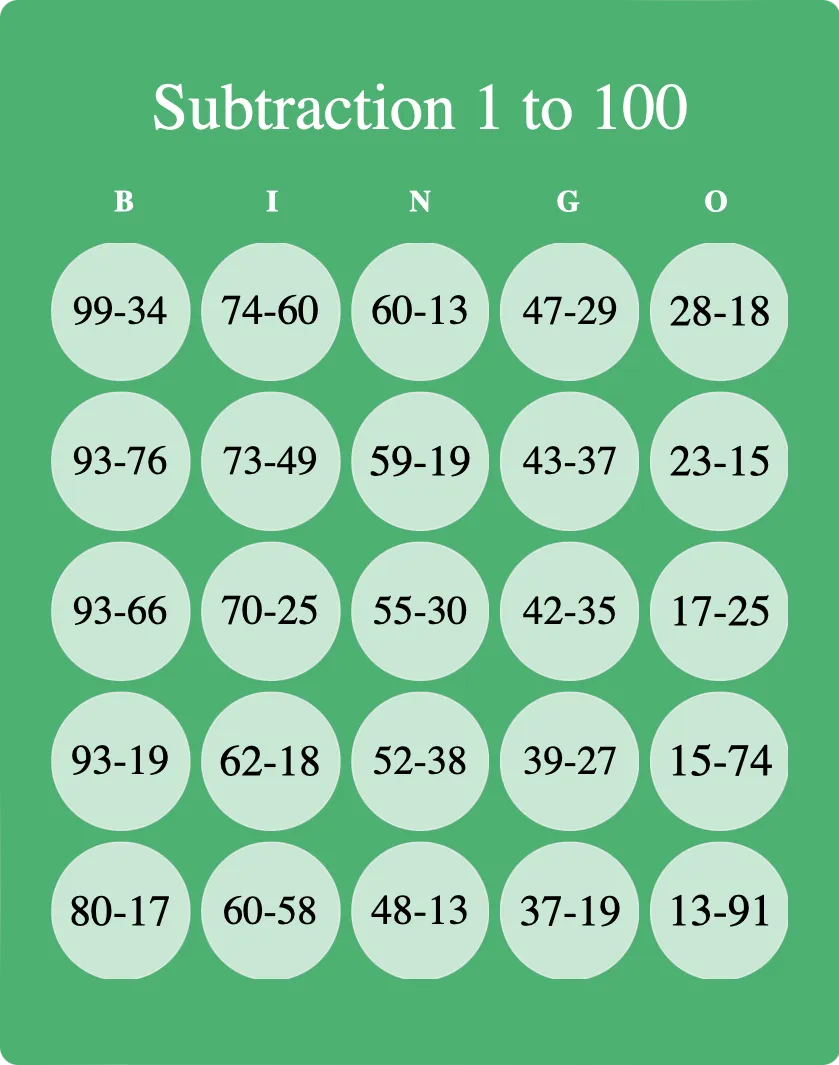
Subtraction 1 to 100 bingo
5+Intermediate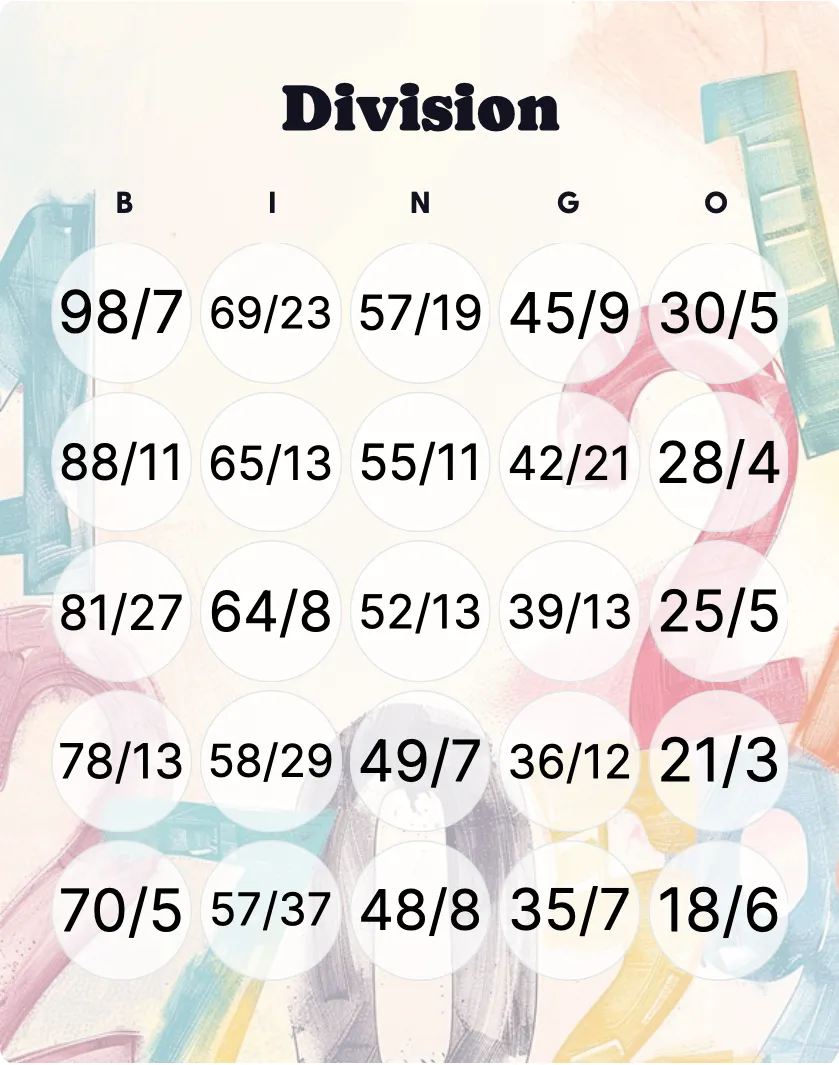
Division bingo
8+Intermediate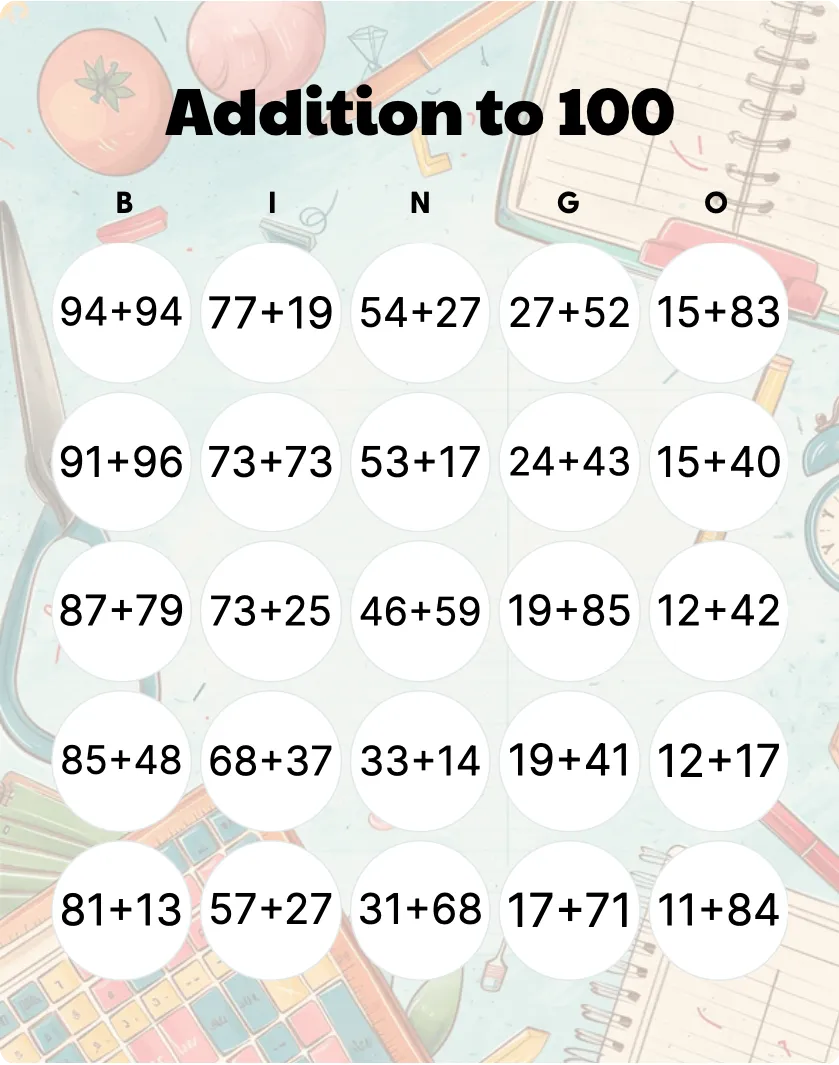
Addition to 100 bingo
5+Intermediate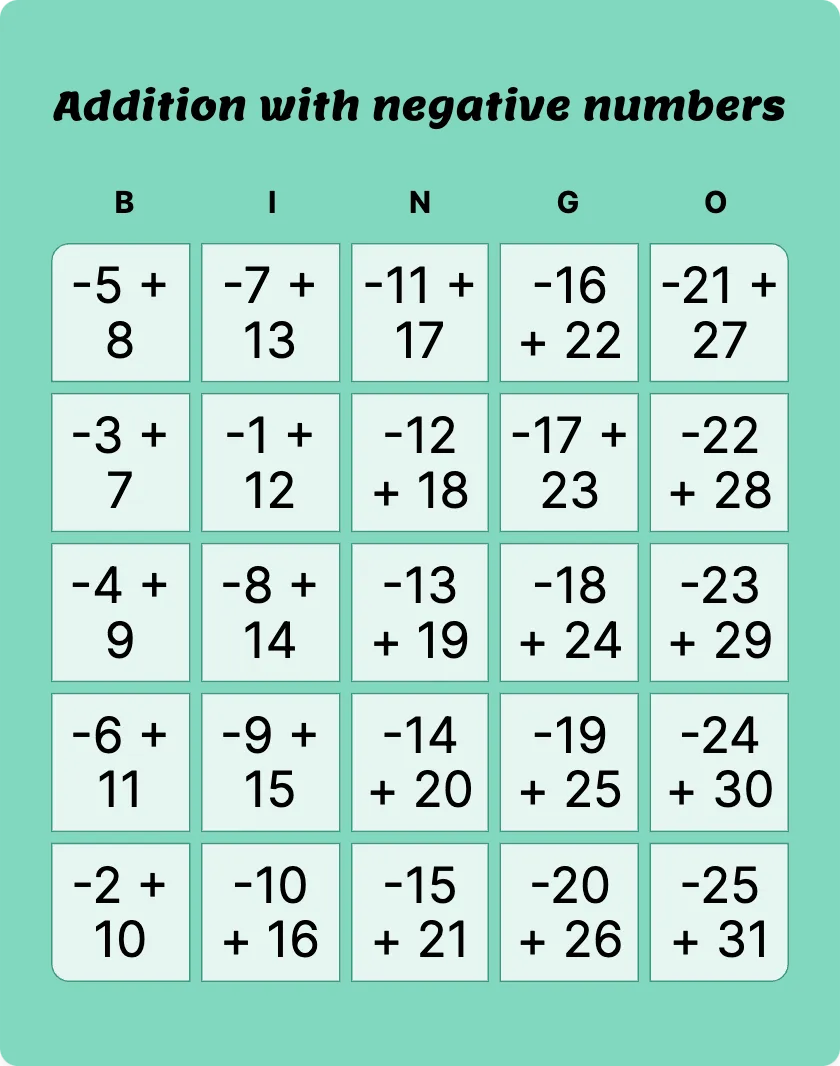
Addition with negative numbers bingo
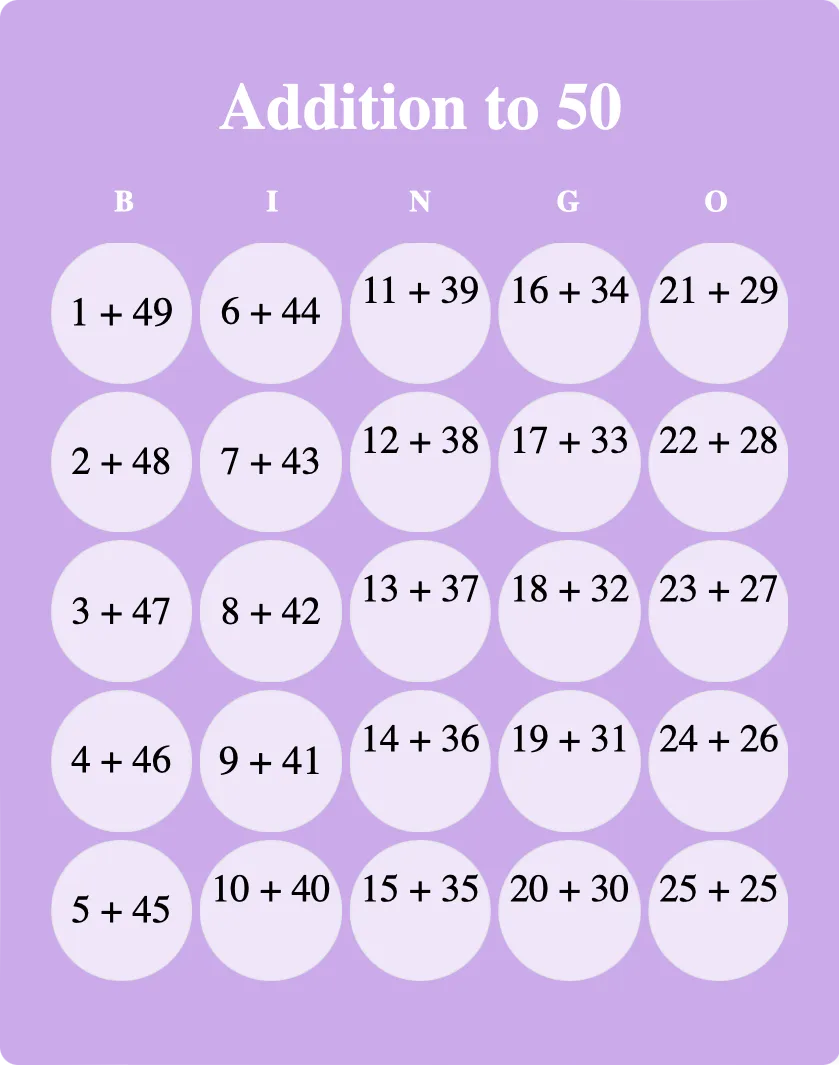
Addition to 50 bingo
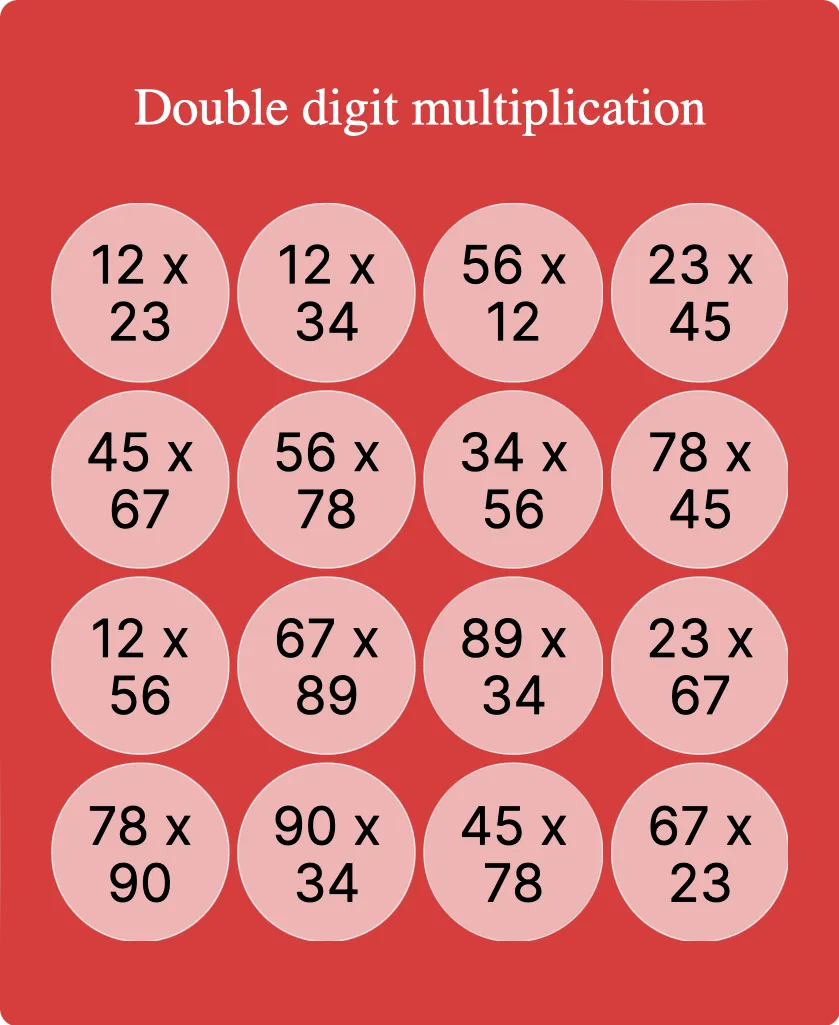
Double digit multiplication bingo
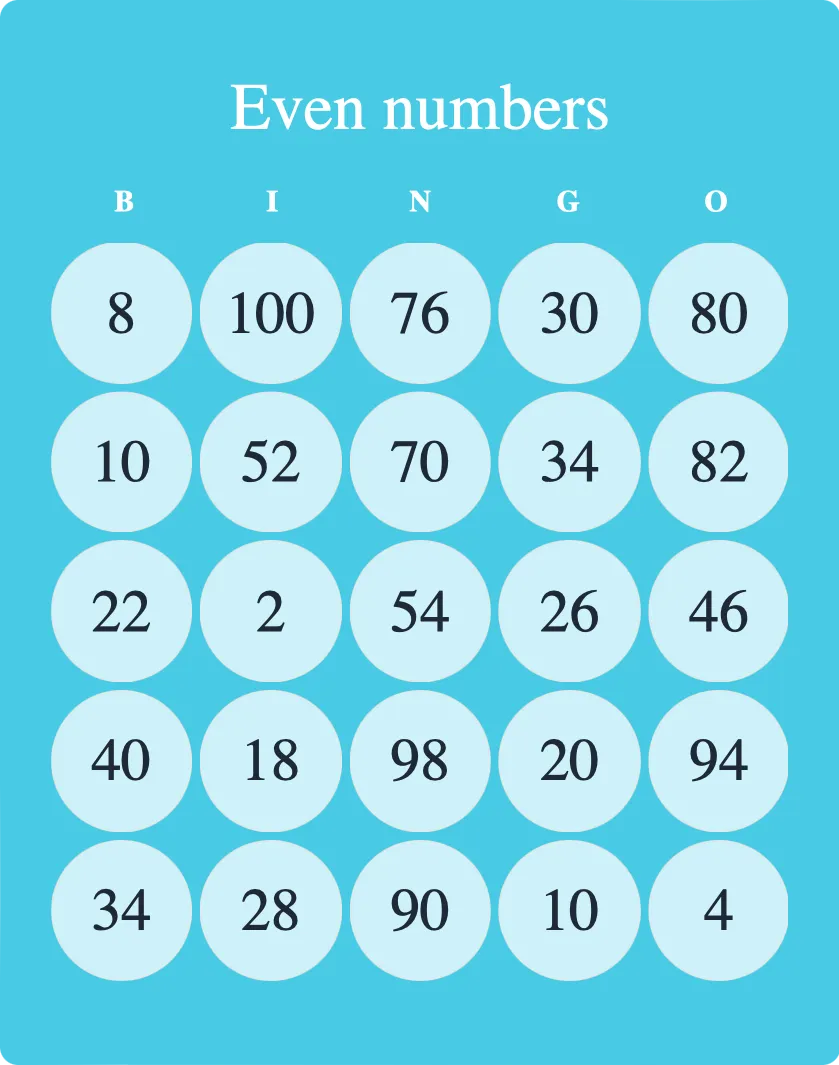
Even numbers bingo
5+Easy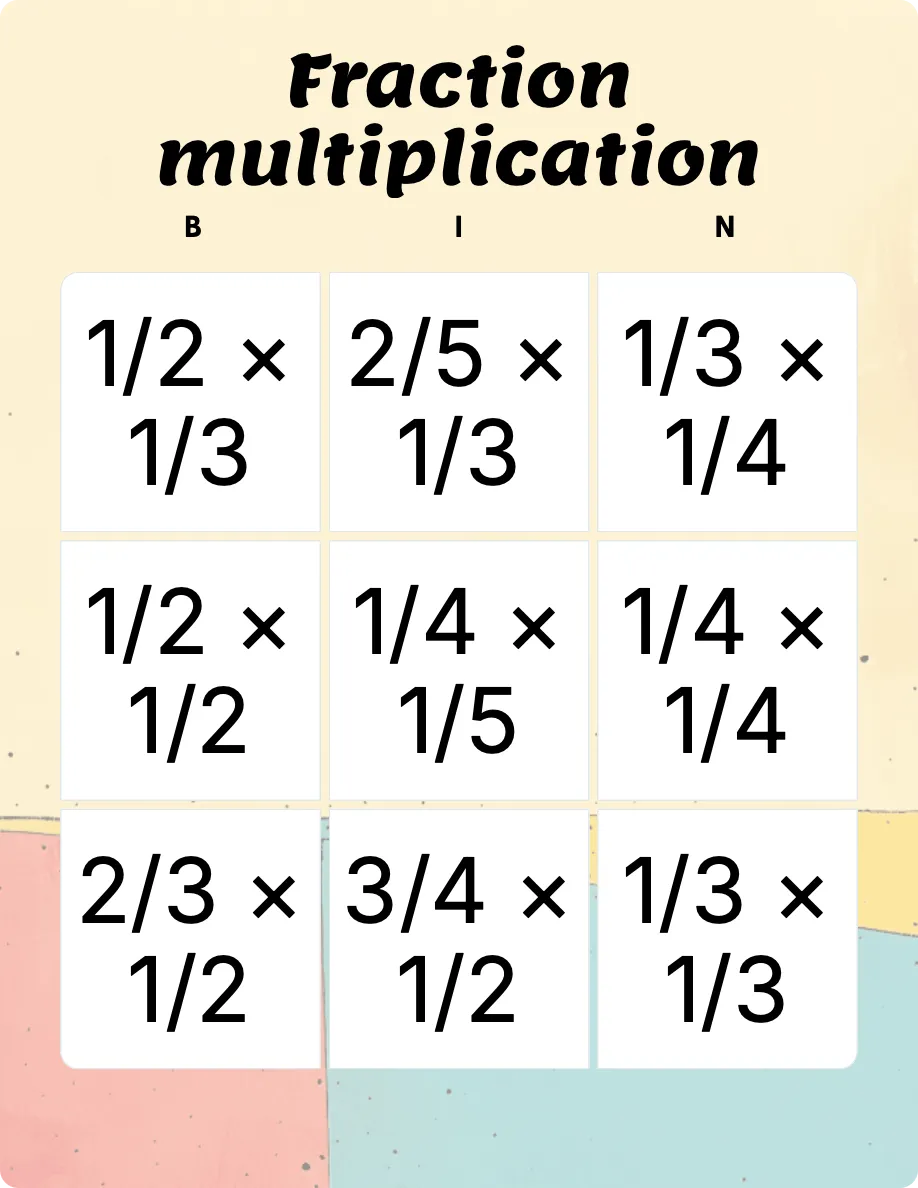
Fraction multiplication bingo
12+Intermediate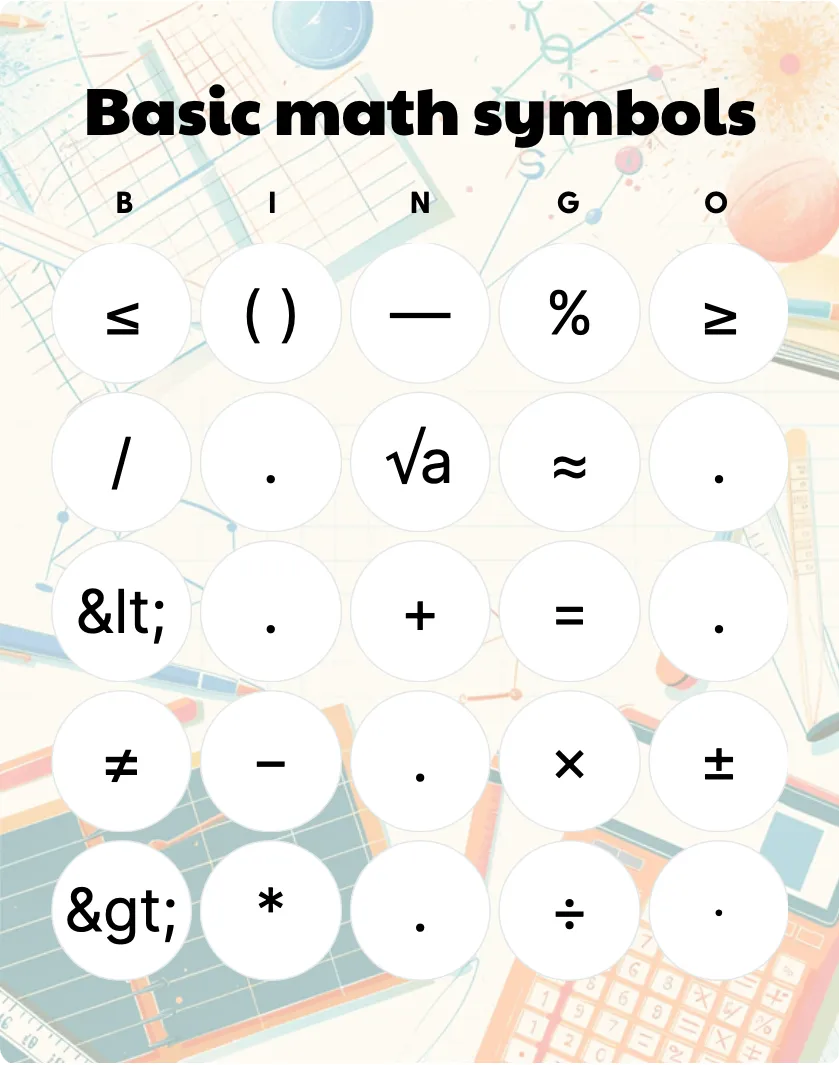
Basic math symbols bingo
5+Easy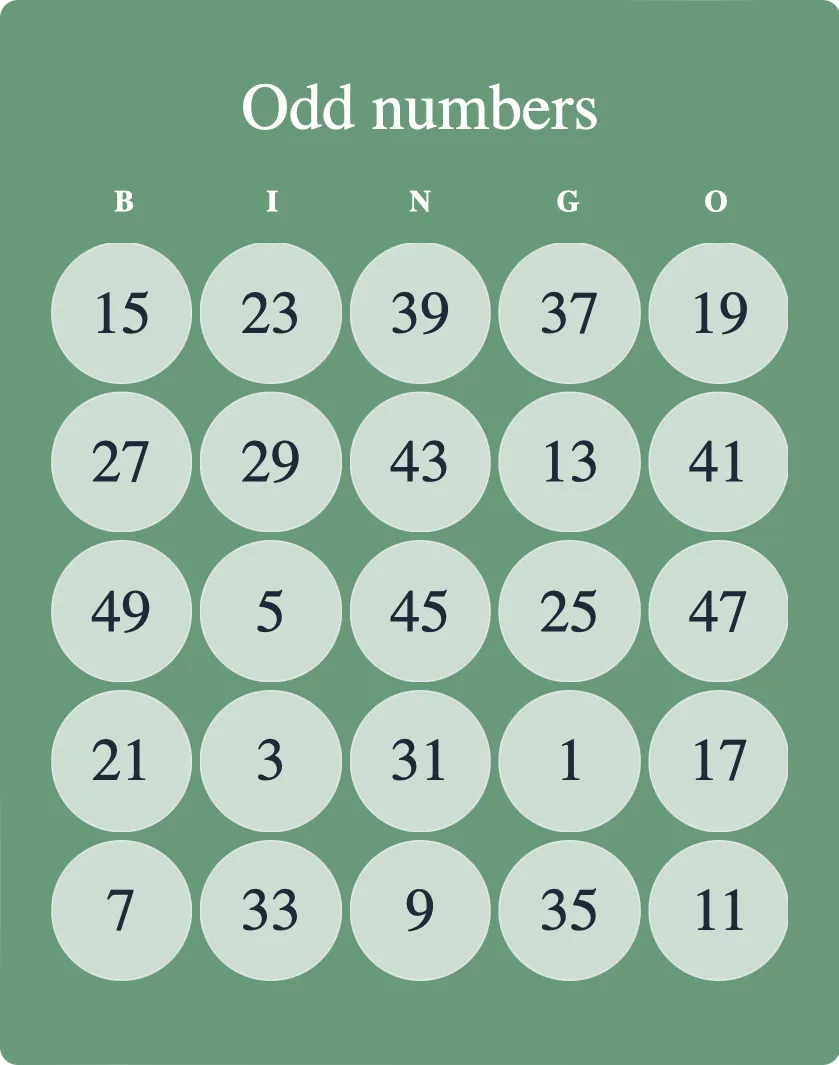
Odd numbers bingo
5+Easy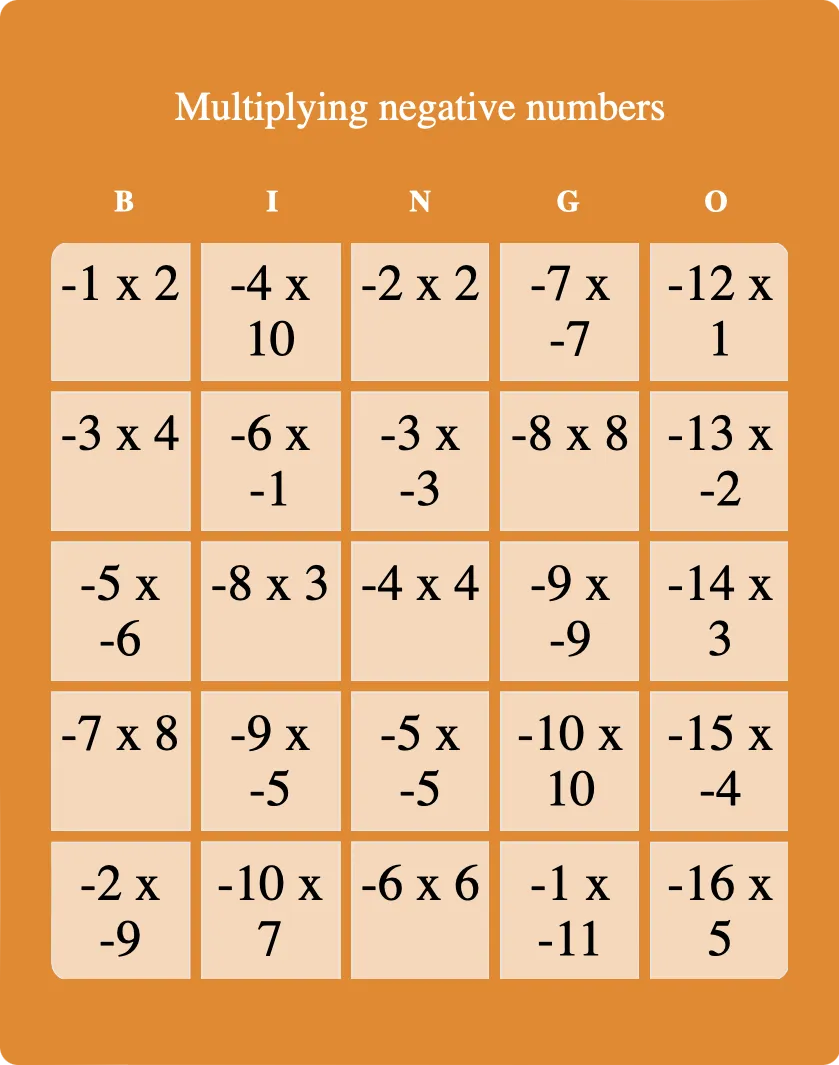
Multiplying negative numbers bingo
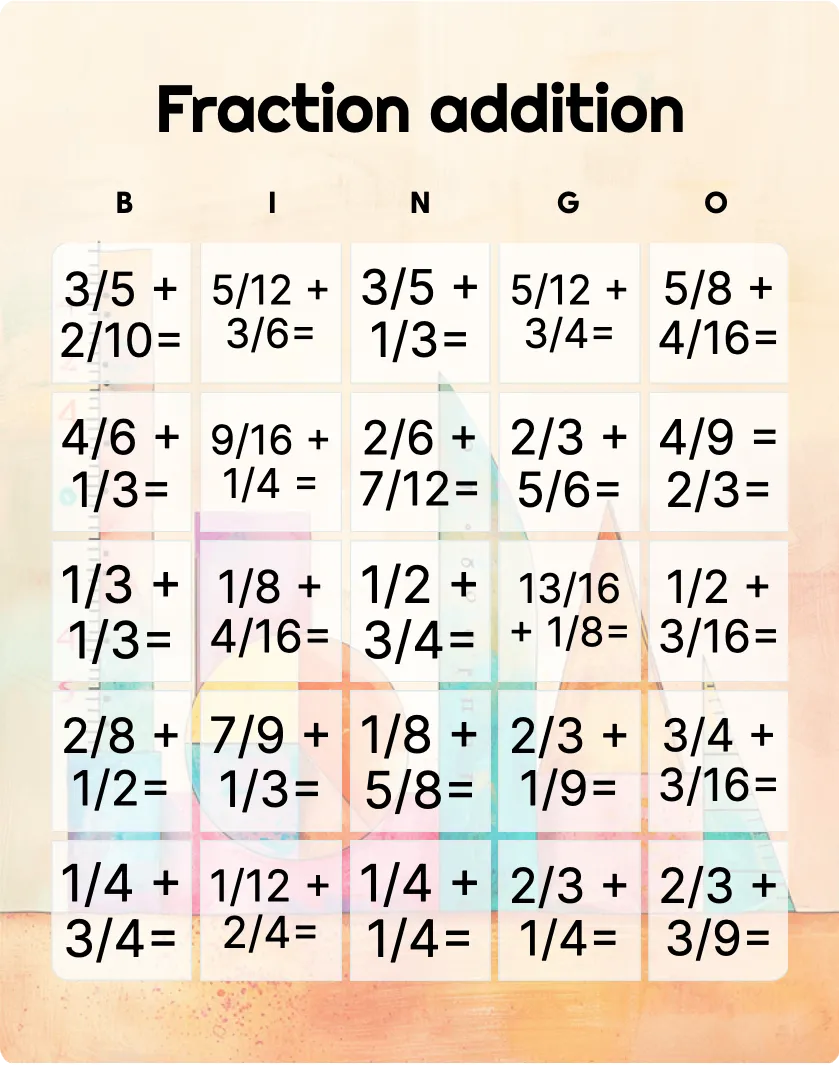
Fraction addition bingo
12+Intermediate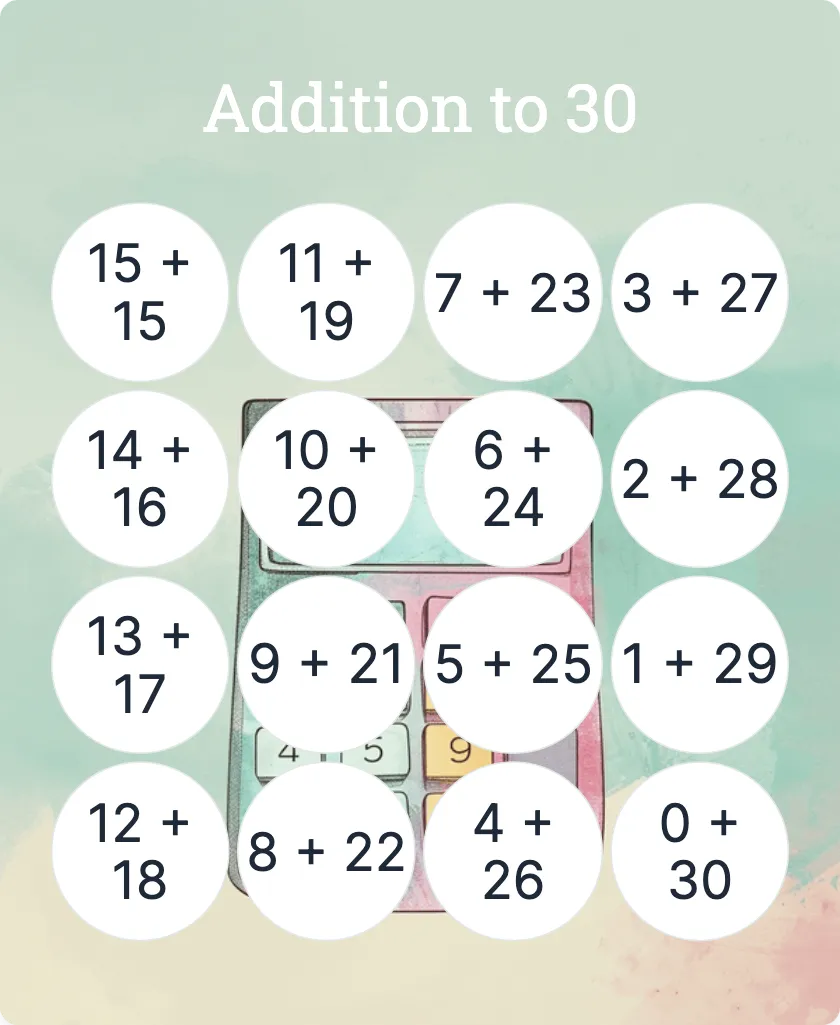
Addition to 30 bingo
5+Easy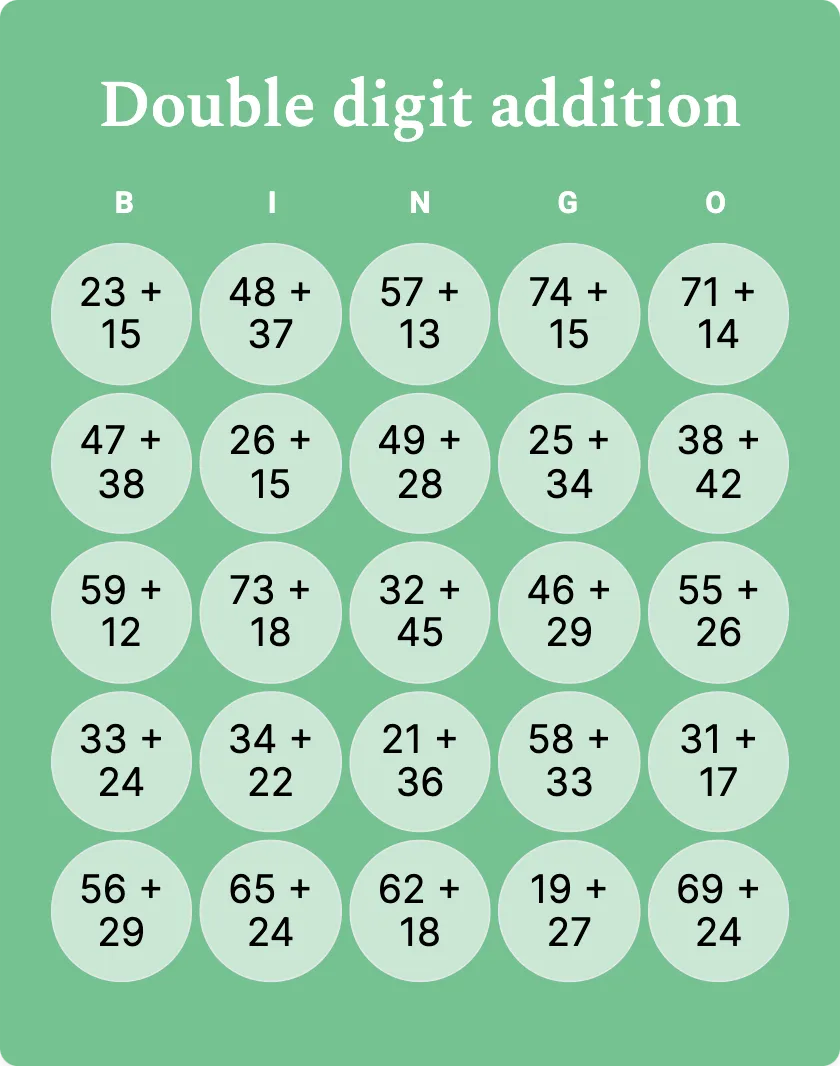
Double digit addition bingo
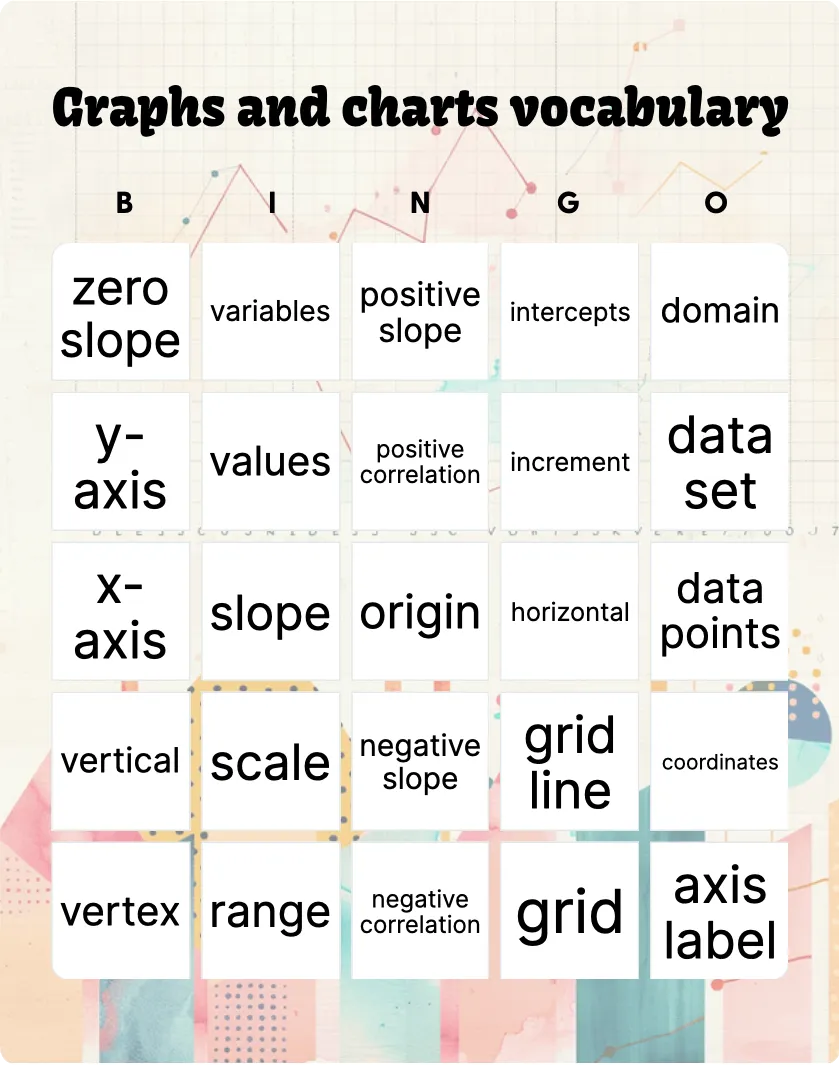
Graphs and charts vocabulary bingo
12+Intermediate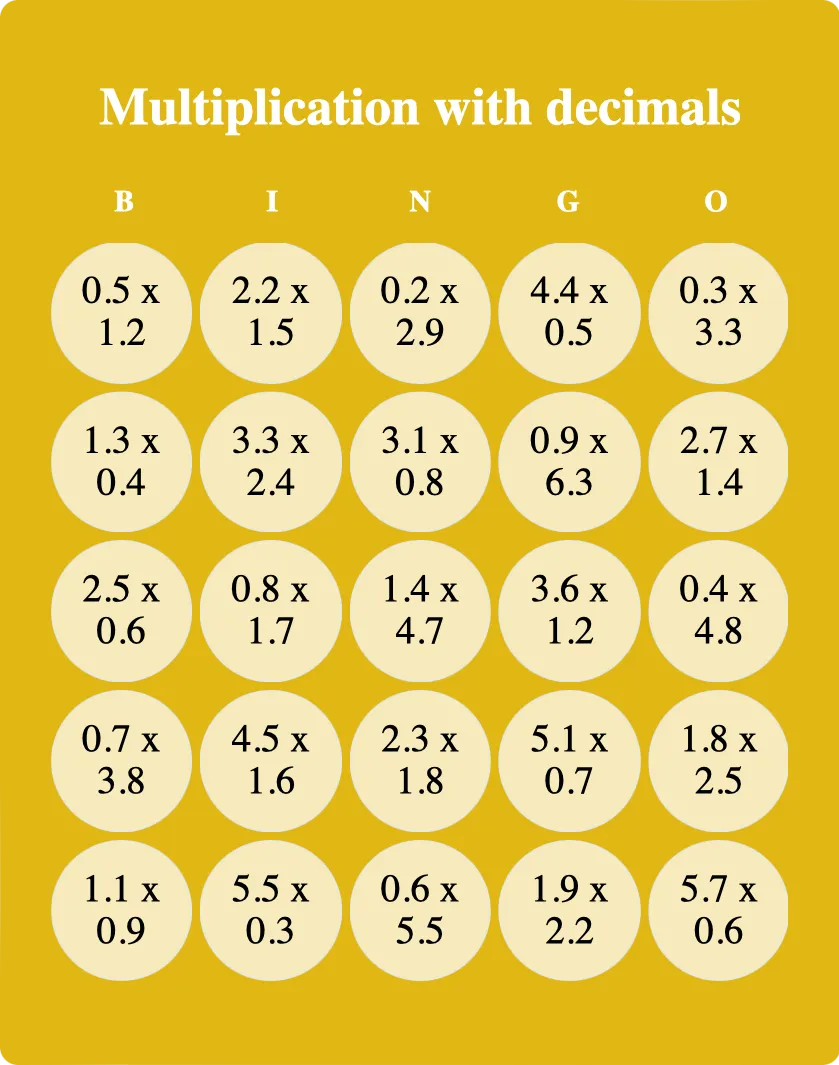
Multiplication with decimals bingo
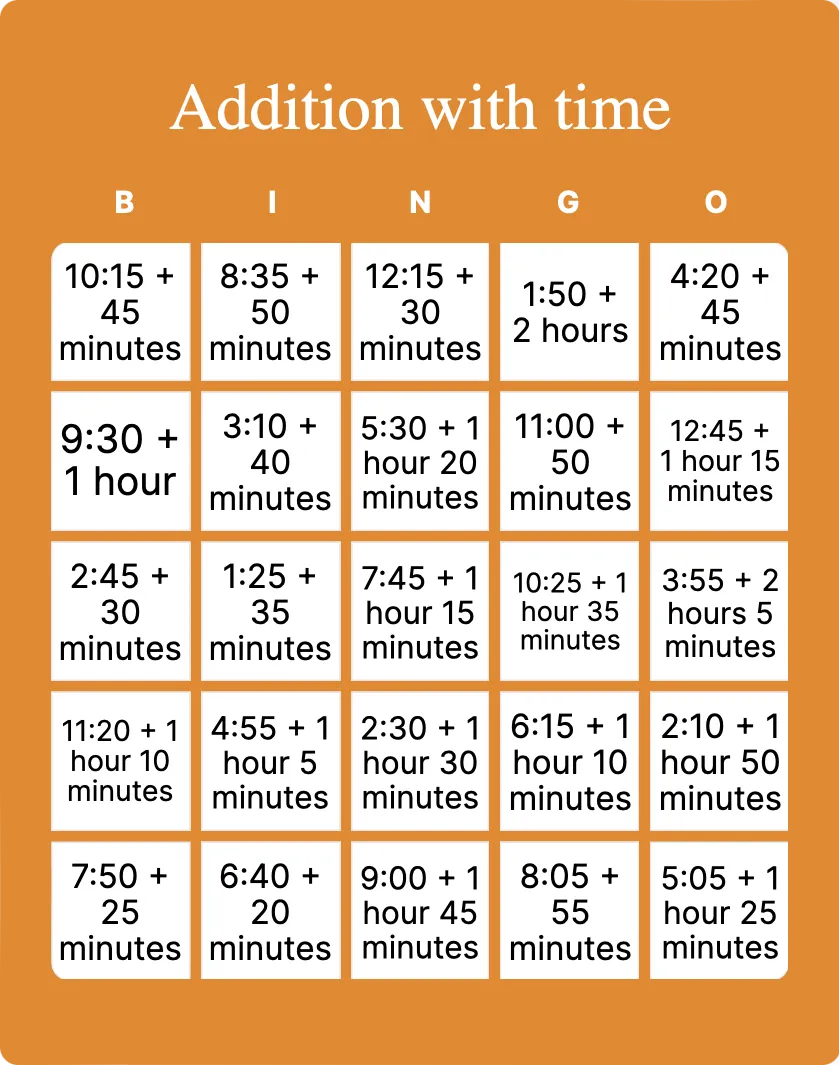
Addition with time bingo
How to choose and run a math bingo game
A useful math bingo game starts with the relationship between the call and the square. Players might hear an addition problem and mark its answer, hear a geometric description and mark the matching term, or hear an algebra term and find it on the card. Decide that relationship before choosing a template, because it determines the difficulty, pace, and amount of checking the game needs.
Choose the topic and level first
Start with material the group has already met. The collection includes number recognition, operations, geometry, algebra, fractions, multiplication, and other topics. A card is a better fit when most squares reinforce the same learning objective rather than mixing unrelated skills.
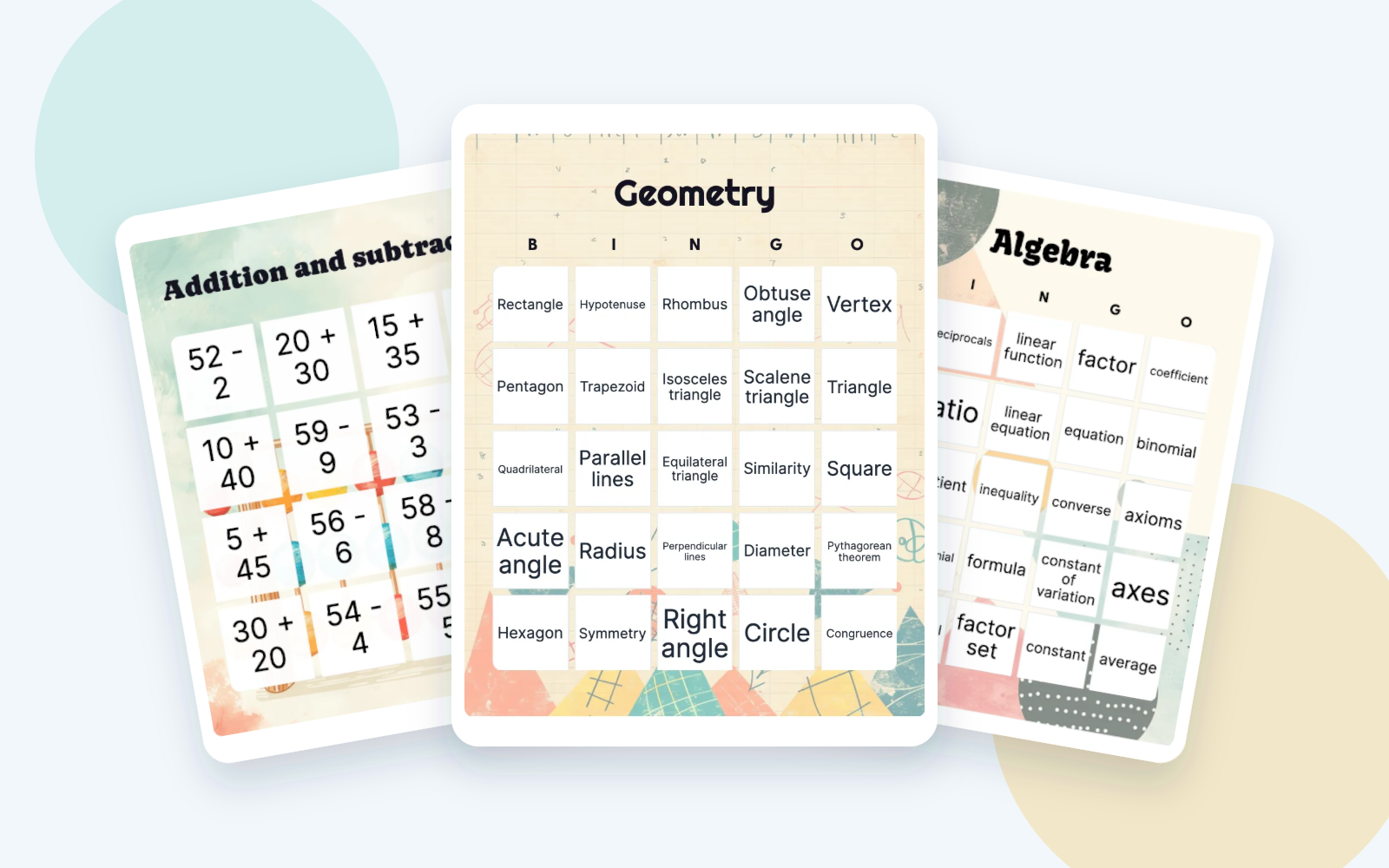
- Addition and subtraction includes calculations such as 25 + 25 and can be used when players are ready to solve before marking.
- Geometry includes terms such as acute, obtuse, right, and parallel, so the caller can use a term, definition, or example.
- Algebra includes vocabulary such as variable, terms, square root, and slope.
Read every square before using a card. Check that the notation, vocabulary, and calculations match what the group has been taught. If one card spans several levels, replace items that are either too easy or not yet familiar.
Decide what the caller will say
Do not assume that the text on the card is also the call list. For an answer card, the caller reads a problem and players mark the answer. For a vocabulary card, the caller might read the term itself, a definition, or a short example. Write this rule at the top of the call sheet so another adult could run the same round consistently.
Build the full call list before printing. Each call should lead to one intended square. If two problems share an answer, decide whether that repetition is deliberate. If a definition could fit more than one term, rewrite it. Work every calculation and check every answer independently rather than relying on the card title or generated order.
Check the call-to-square relationship
Lay one sample card next to the call sheet and follow several calls exactly as a player would. An operation card may show 50 while the caller reads 25 + 25. A geometry card may show “parallel lines” while the caller reads a definition. An algebra card may show “variable” while the caller gives a short example. If the player has to guess which of those methods is being used, the instructions are not ready.
Keep the call sheet beside the caller rather than improvising new problems during the round. Improvised calls can introduce an answer that is absent, duplicate another answer, or change the difficulty without warning. A written list also gives you a reliable record when checking a winning line.

Match the grid and winning pattern to the group
A smaller grid produces a shorter round and gives players fewer places to scan. A larger grid supports a longer game but can add reading and working-memory demands. Choose a winning pattern that fits the time available: one line is simple, while four corners or a full card takes longer.
Tell players whether they may use paper, counters, a number line, a calculator, or another familiar aid. The goal is not to introduce an unexpected test condition. If mental speed is not the point of the activity, pause after each call and give everyone enough time to solve and check.
If the group contains several levels, make the adaptation visible to everyone. You might read and display each problem, pair players, provide a common reference sheet, or use separate rounds with different call lists. Avoid quietly giving easier calls to one person in a way that singles them out.
Prepare a checked round
- Choose one topic and a level the group recognizes.
- Review every square and replace anything unsuitable.
- Create a call for each intended answer or term.
- Run through the call list and remove ambiguous or duplicate answers.
- Choose the winning pattern and explain the marking rule.
- Prepare the cards using the printing guide, or follow the online play guide for remote players.
Keep the game useful for different learners
Players can work independently, in pairs, or with a shared support sheet. Pair play can make the reasoning visible: one player solves while the other checks, then they swap roles. You can also read a problem twice, display it as well as saying it, or allow a short discussion before marking.
Avoid eliminating a player after a wrong answer. Instead, check the claimed line together. Ask the player to explain how each marked square connects to its call, and correct misunderstandings without turning the check into a public speed contest.
Use another round to change the task
You do not need a harder card to make a second round different. Keep the same squares and change the winning pattern, let pairs take turns explaining answers, or reverse the relationship between terms and definitions where the card supports it. If you change the way calls work, explain the new rule and use a freshly checked call sheet.
Fix common problems
- The round is too slow: shorten the winning pattern or use a smaller grid. Do not rush the calls.
- Players mark different answers: stop and check the wording. Record the ruling, then revise that call before the next round.
- One item is much harder: replace it or provide the same support to everyone.
- A player calls bingo incorrectly: review the marked squares against the call list and continue the round without a penalty.
The most reliable setup is a narrow topic, a checked call list, and a pace that leaves room for thinking. Once those are settled, the card becomes a practical way to revisit familiar material rather than a guessing game.
Generate bingo cards,
your way
Unleash your creativity with our versatile generator that simplifies the creation of personalized cards featuring text, emojis, and images!
Create card
Frequently asked questions
Should math bingo cards show problems or answers?
How do I choose the right difficulty?
Can players use calculators or other aids?
How can I make math bingo less focused on speed?
You may also be interested in....
Not quite found the card you were looking for? Here are some similar categories that you may be interested in.