Number bingo
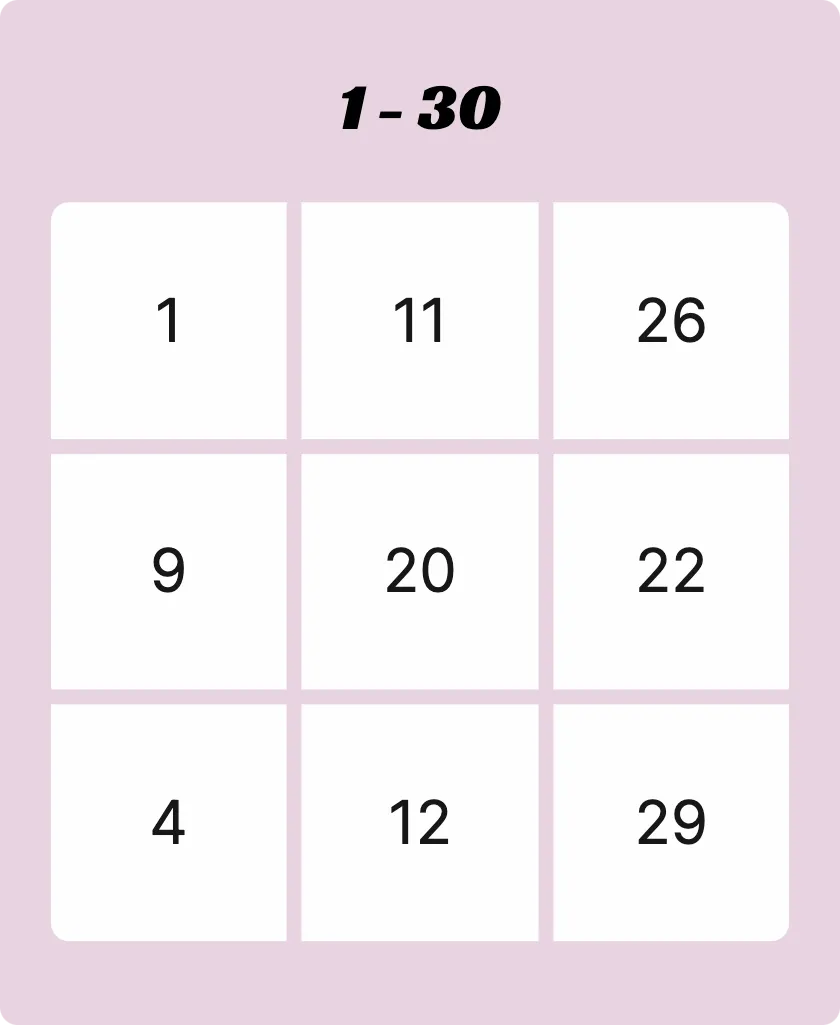
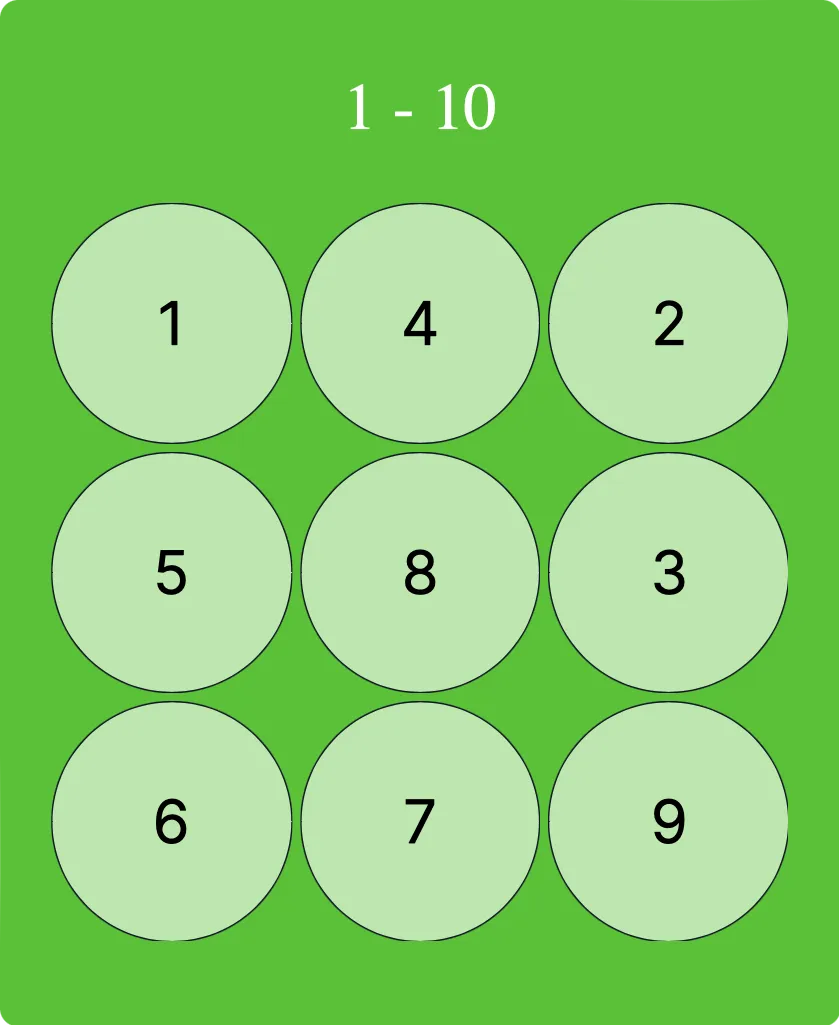
Number bingo cards use different ranges and layouts, including 1-30, 1-75, and 1-90 formats. Choose the version your group expects, then prepare calls and a winning pattern that match it. This is number recognition rather than math bingo: players mark the number called instead of solving a problem before choosing a square.
How to choose a number bingo format
Number bingo is built around recognizing and matching called numbers. It is different from math bingo, where a caller may read a calculation and ask players to mark the answer. Here, the main choice is the number range and card layout. Pick the format the group understands, then make sure the call set, winning rule, and cards all belong to the same version.
Compare the number ranges
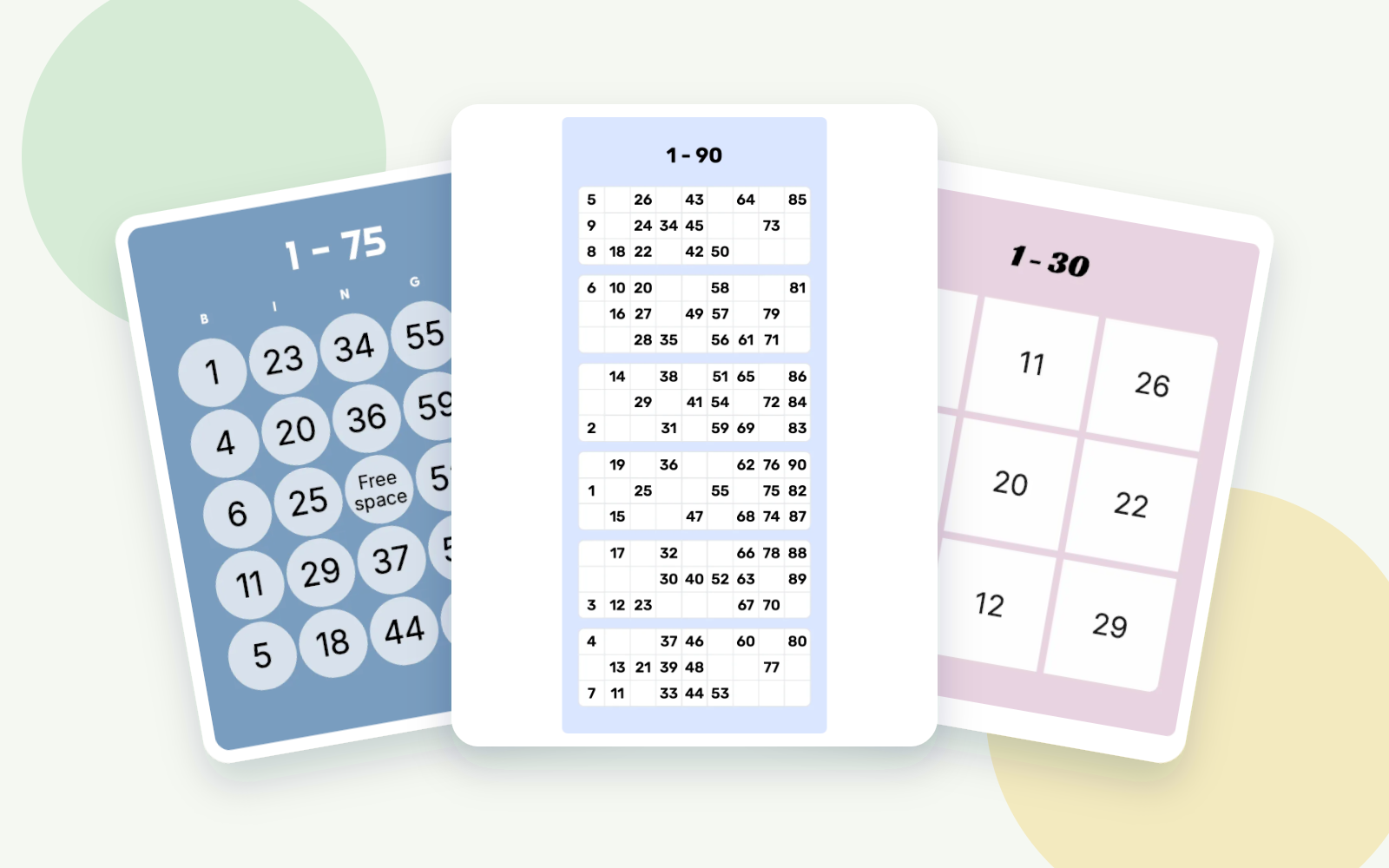
- 1-30 bingo uses a smaller pool and can suit a shorter, simpler number-recognition game.
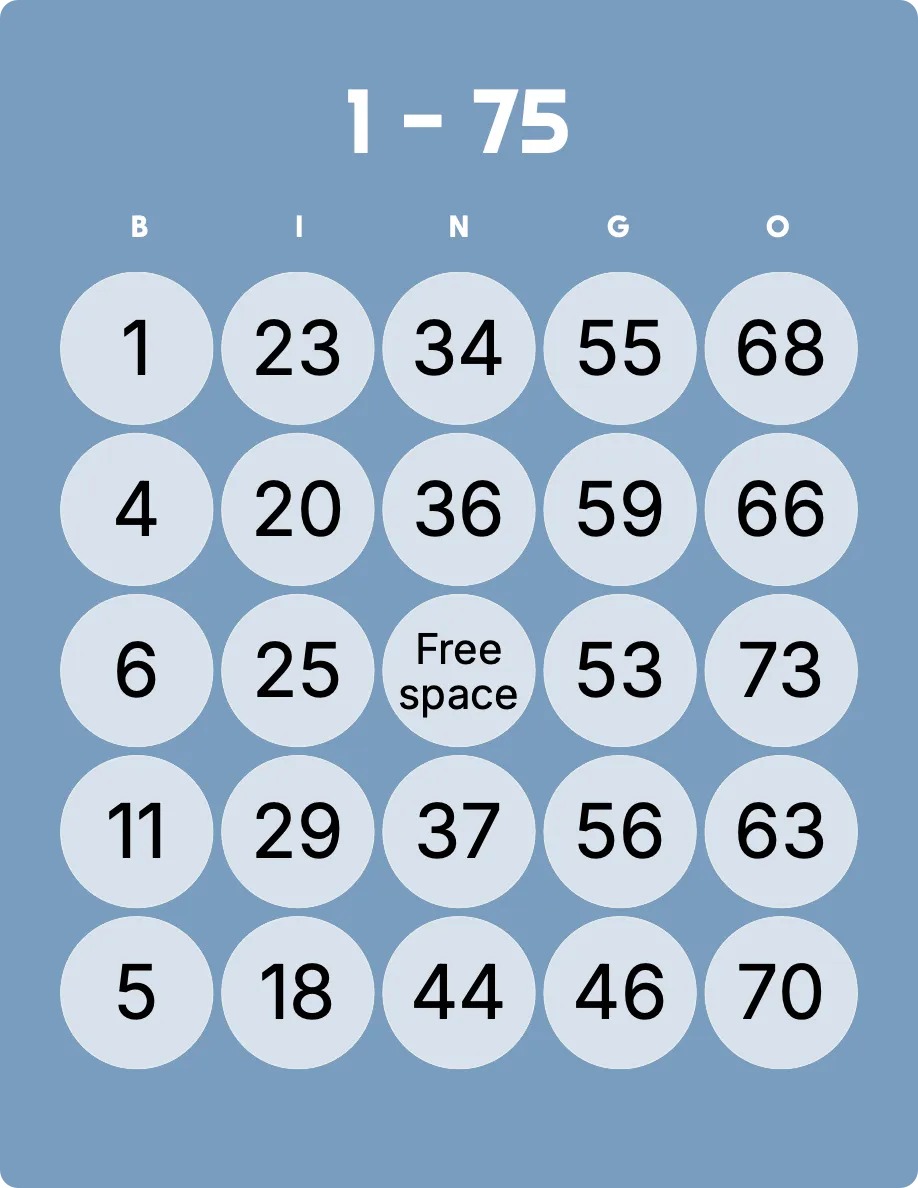
- 1-75 bingo uses numbers from 1 through 75 on a five-column card.
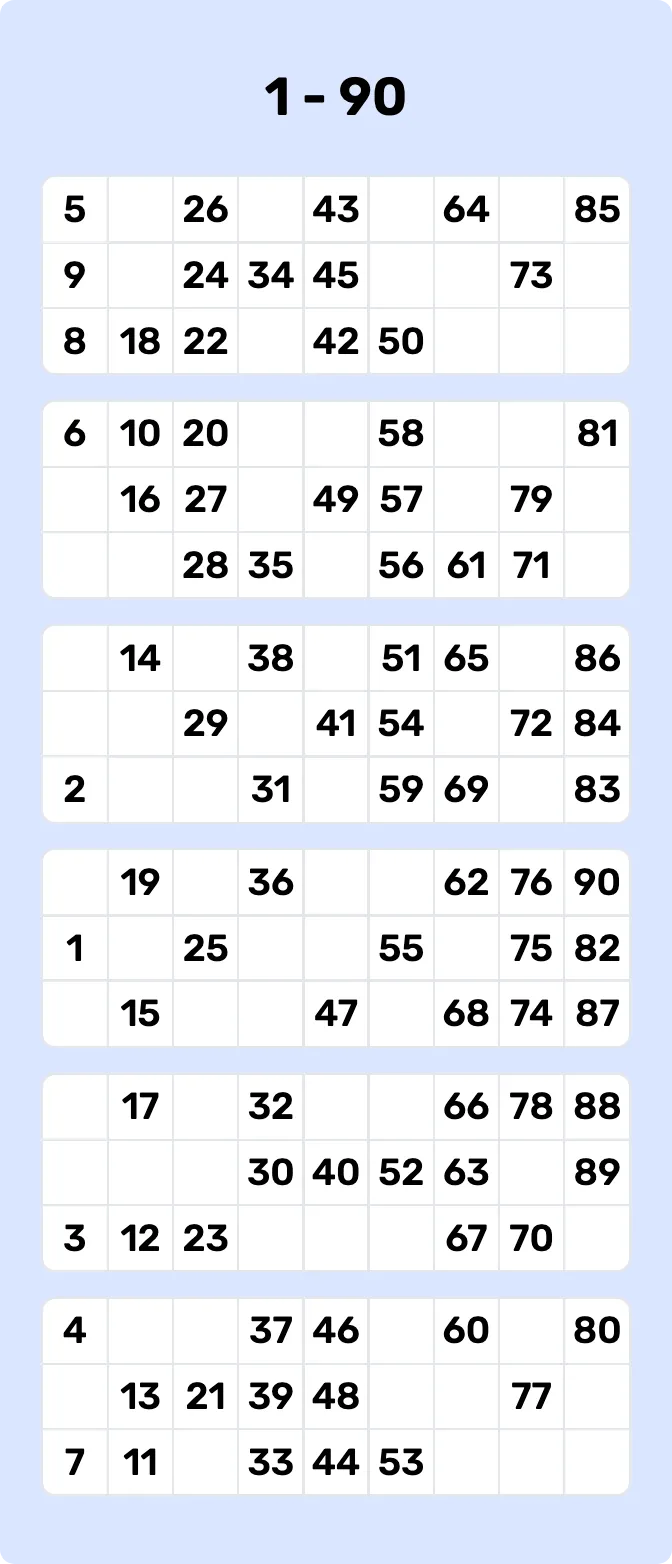
- 1-90 bingo uses a different ticket shape and number range, so it should have its own matching call set and winning rules.
Do not mix formats during setup. A 1-75 caller cannot run a complete 1-90 game, and a winning pattern designed for a square card may not make sense on a 1-90 ticket. If players expect a familiar local version, use that rather than changing the layout without explanation.
Prepare the matching call set
Check that every number in the chosen range can be called once and recorded. Physical balls, cards, slips, or a digital caller can all work, but the host needs a visible history so a claim can be checked. Keep called items separate from uncalled items.
Use one consistent way to announce numbers. Repeat the number clearly and give players time to scan before moving on. If the format uses column letters, explain whether the caller will include them. Avoid adding nicknames unless every player understands them.
Choose the winning rule before play
Show the required pattern rather than relying on the word “bingo.” On a square card, that might be one horizontal, vertical, or diagonal line. On a 1-90 ticket, the group may be playing for one line, two lines, or a full house. The exact convention is less important than stating it clearly and using it consistently.
Also decide whether a free space counts, how ties are handled, and whether the round ends at the first verified claim. If you plan several rounds, announce the new pattern before the calls restart.

Set up cards players can read
Print at a size that keeps every number legible. Use markers that do not obscure the number completely, so a claimed line can be checked. The printing guide covers card preparation. For remote play, use the online play guide and make sure each player knows how to mark and submit a claim.
For players who are learning number recognition, slow the calls, display each number as well as saying it, and use a smaller range when appropriate. A short round with clear numbers is preferable to a longer round that depends on guessing or keeping up with the caller.

Check a winning claim
- Pause the calls and identify the claimed pattern.
- Read the marked numbers back from the card.
- Compare each number with the call history.
- If the claim is correct, end or reset the round as agreed.
- If it is not correct, explain which number is missing and continue without a penalty.
Avoid common setup errors
- The call set does not match: stop and replace it before continuing.
- Players expect different rules: show the pattern and tie rule before the first call.
- Numbers are hard to read: reprint at a larger size or reduce the number of cards per page.
- The round runs too long: use a shorter winning pattern next time rather than speeding up the calls.
Once the range, call set, and pattern match, number bingo is straightforward to run. Most problems come from mixing conventions, so make those three choices explicit before the game begins.
Generate bingo cards,
your way
Unleash your creativity with our versatile generator that simplifies the creation of personalized cards featuring text, emojis, and images!
Create card
Frequently asked questions
What is the difference between 1-75 and 1-90 bingo?
Which number bingo format is easiest for beginners?
Is number bingo the same as math bingo?
How do I check a winning number bingo card?
Blog
How many numbers in bingo: Unraveling the variations
Dive into the fascinating world of bingo numbers. Explore different game variations and strategies to enhance your bingo experience.
How to play (and win!) 90 ball bingo
Dive into the captivating world of 90 Ball Bingo, the UK’s cherished pastime. With a 9×3 grid and 90 balls, players eagerly mark their cards, aiming for the winning line or full house.
How to play bingo: Rules, patterns, variations & winning
Master the game of Bingo with our comprehensive guide. Discover rules, patterns, variations, and strategies, plus creative ideas to make learning fun for kids. Let’s get those winning shouts rolling!
The ultimate guide to bingo patterns
Explore the exciting world of bingo patterns! From the classic single line to quirky shapes like diamonds and letters, spice up your bingo nights effortlessly.