
Scavenger hunt bingo
Scavenger hunt bingo cards turn a location into a search for objects, colors, signs, or observations. Match the card to the setting, then decide whether players will see, collect, photograph, or describe each item. Set proof, substitutions, boundaries, supervision, and winner checks before anyone leaves. No square should require trespassing, unsafe travel, photos of strangers, confidential material, or collecting protected natural objects.
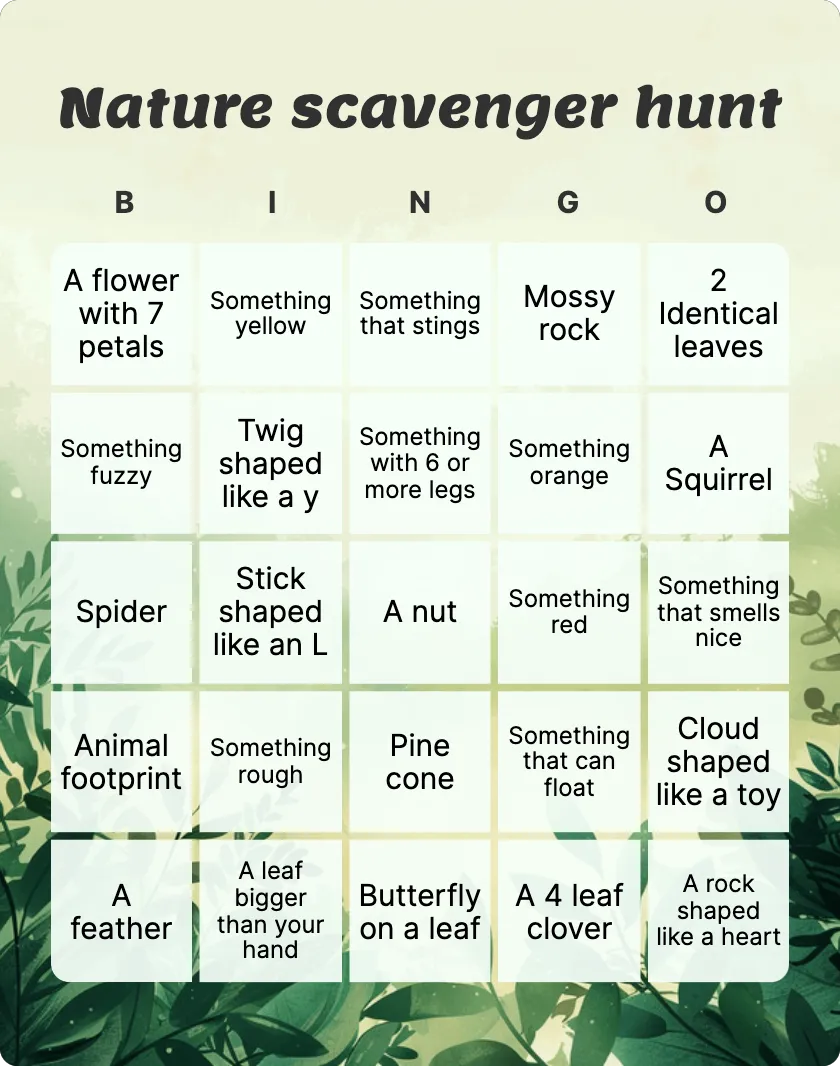
Nature scavenger hunt bingo
5+Intermediate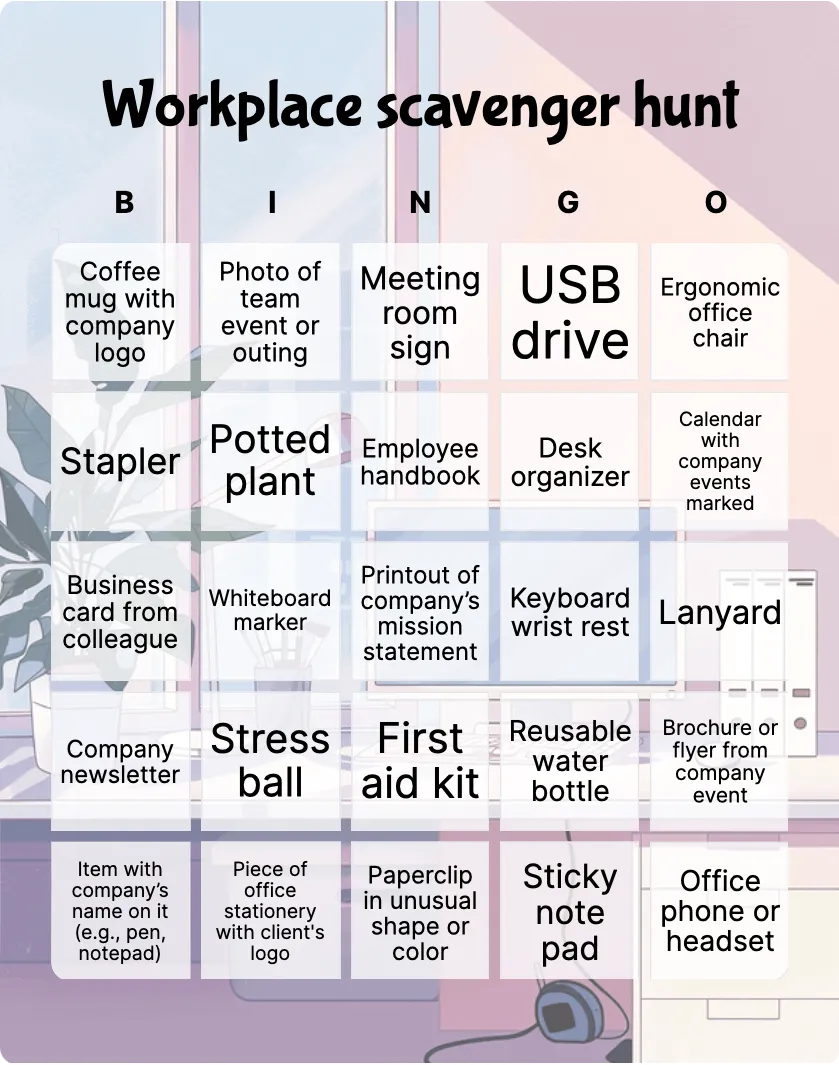
Workplace scavenger hunt bingo
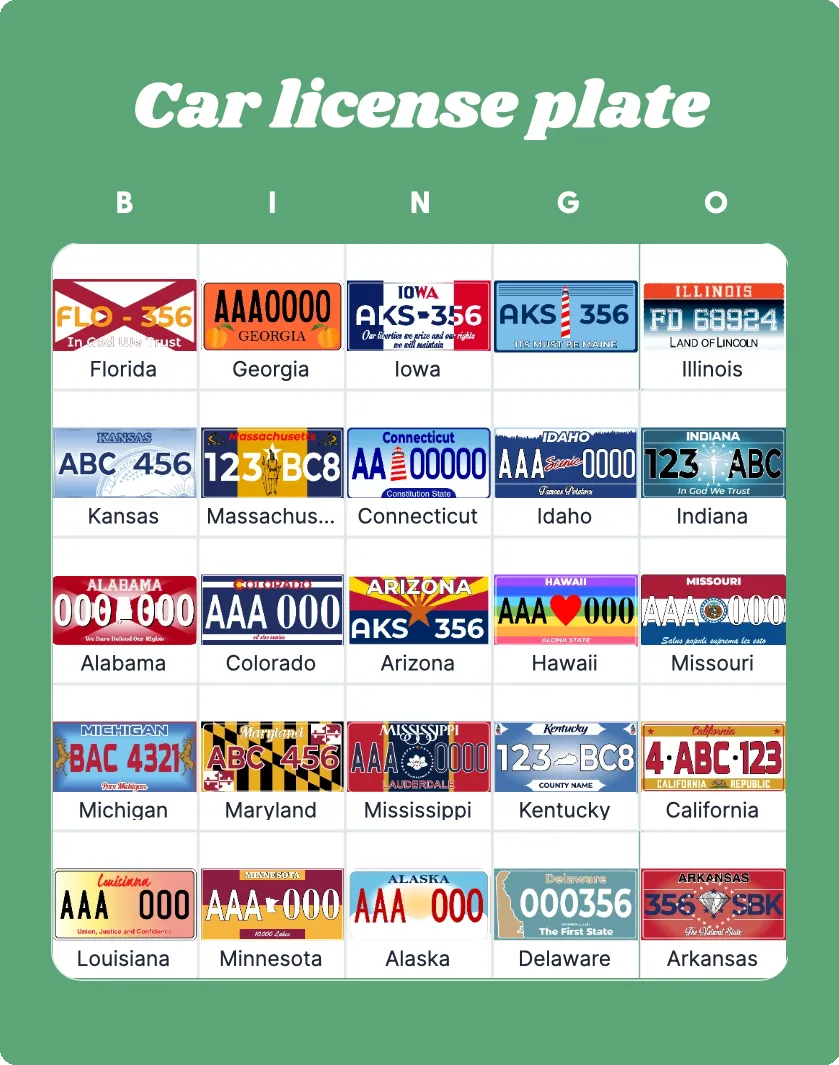
Car license plate bingo
5+Intermediate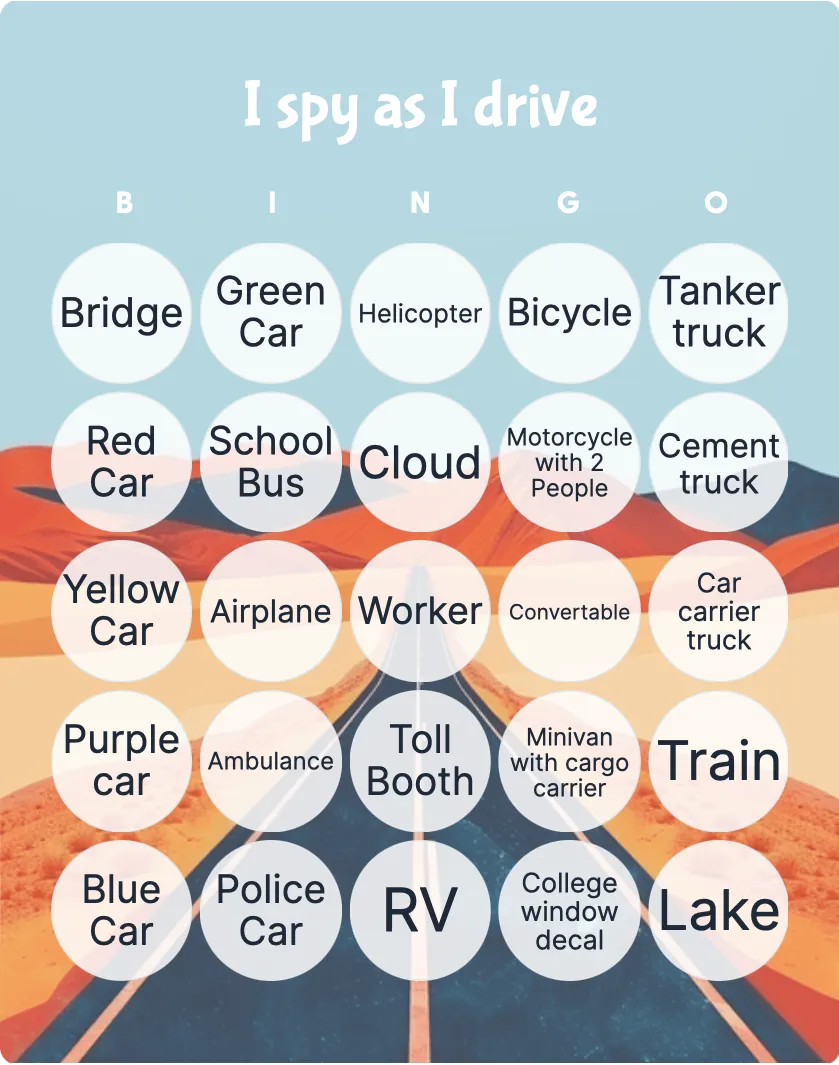
I spy as I drive bingo
5+Intermediate
Car brands bingo
12+Intermediate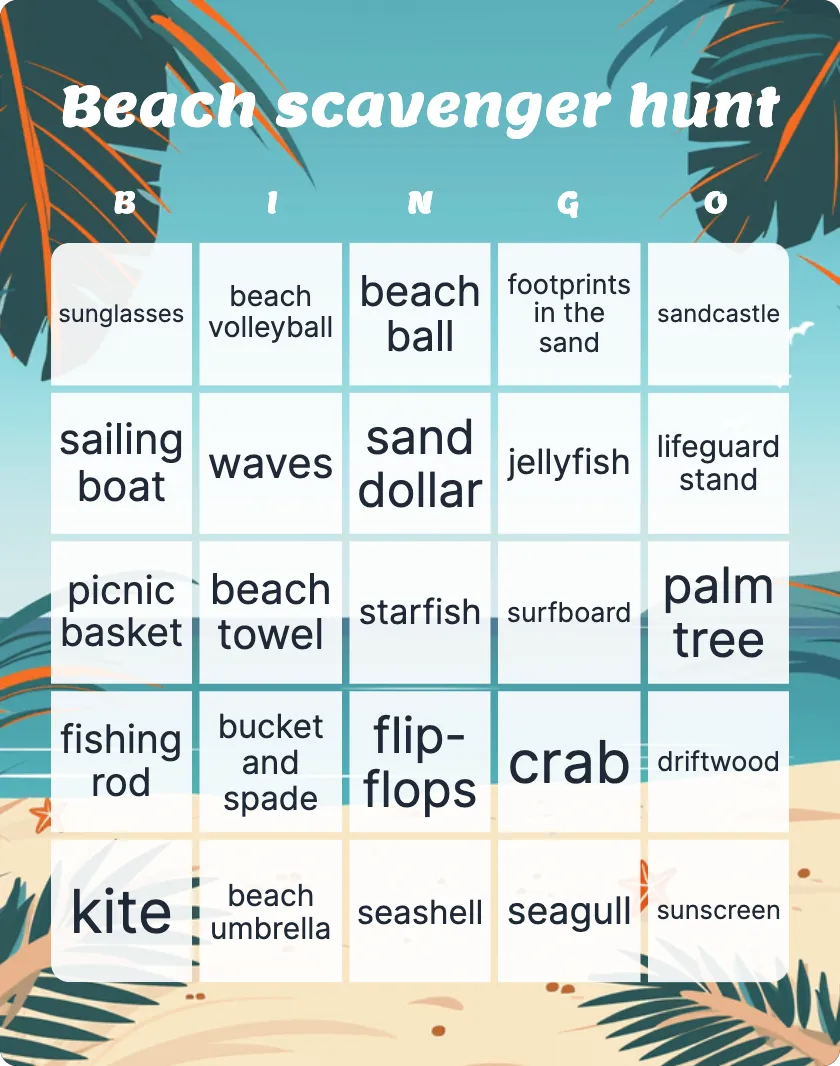
Beach scavenger hunt bingo
5+Intermediate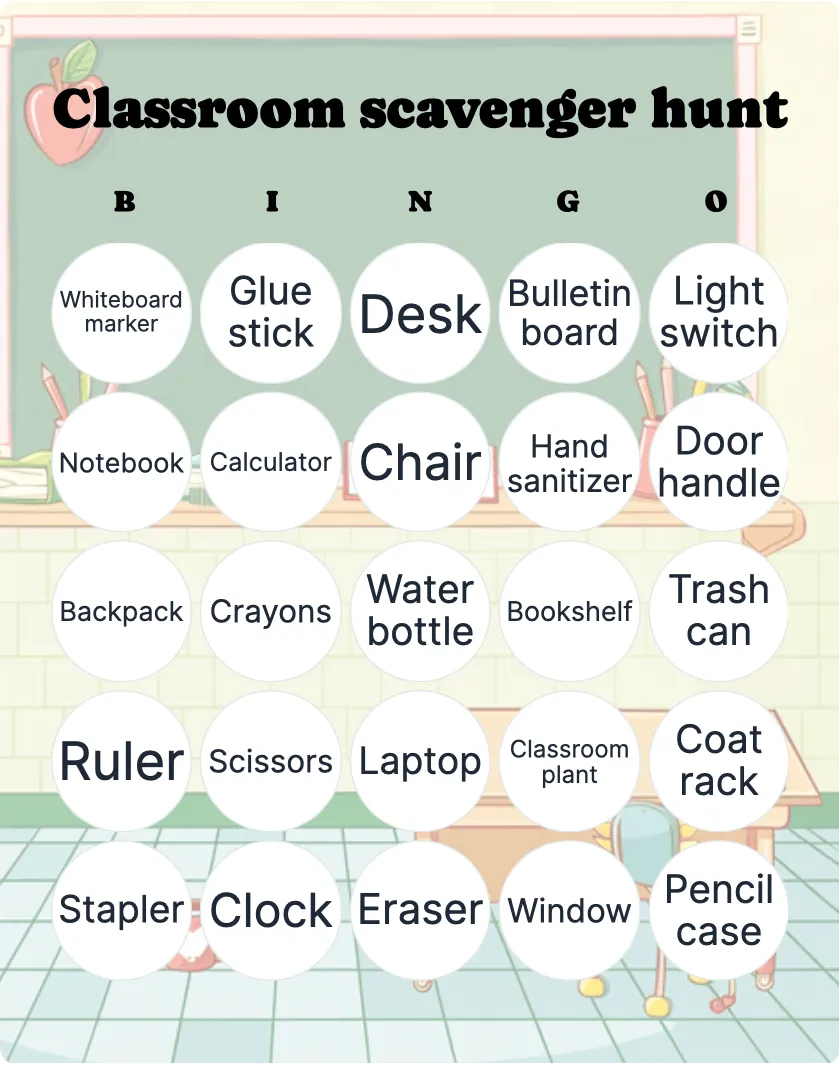
Classroom scavenger hunt bingo
5+Easy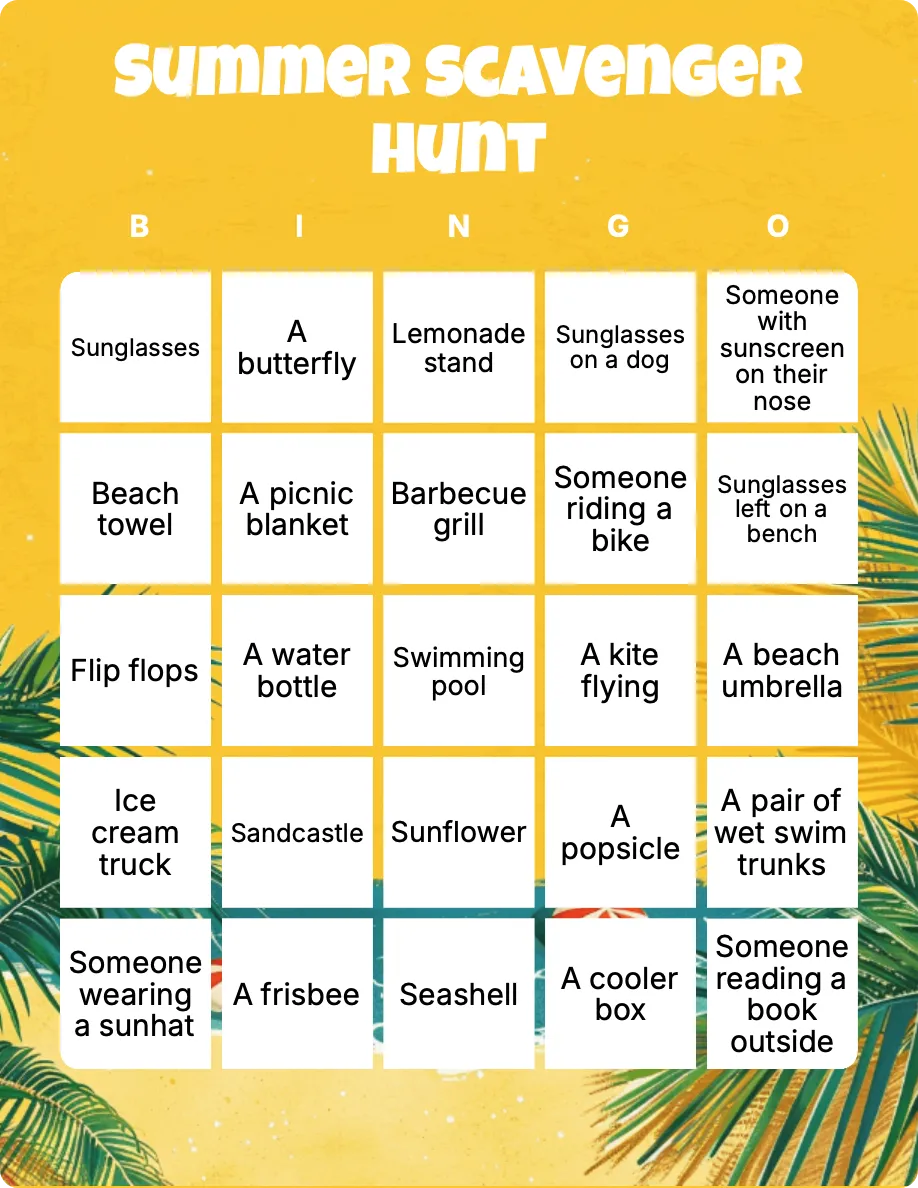
Summer scavenger hunt bingo
5+Intermediate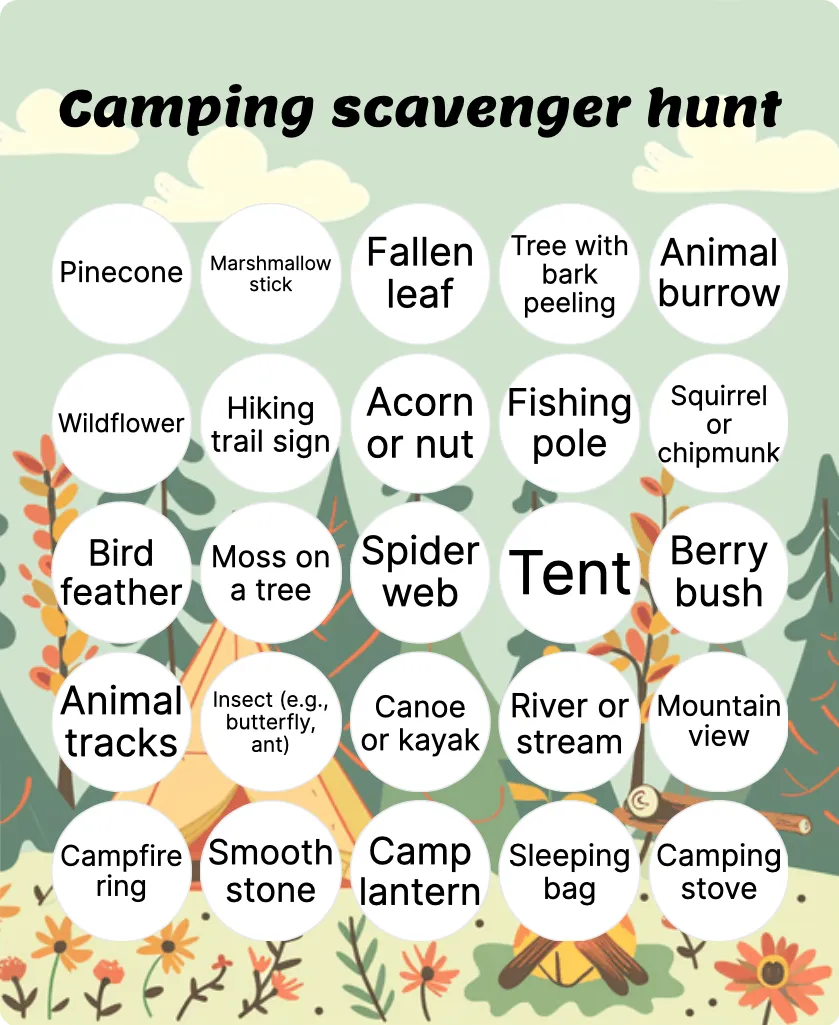
Camping scavenger hunt bingo
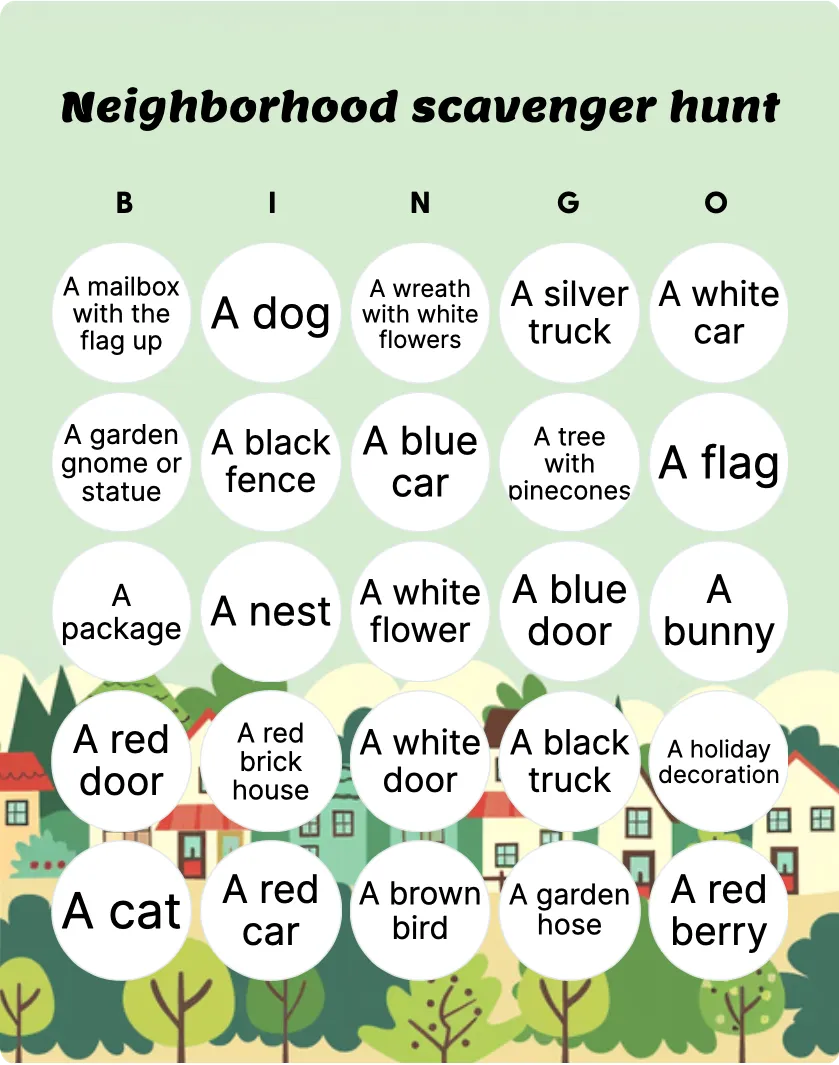
Neighborhood scavenger hunt bingo
5+Challenging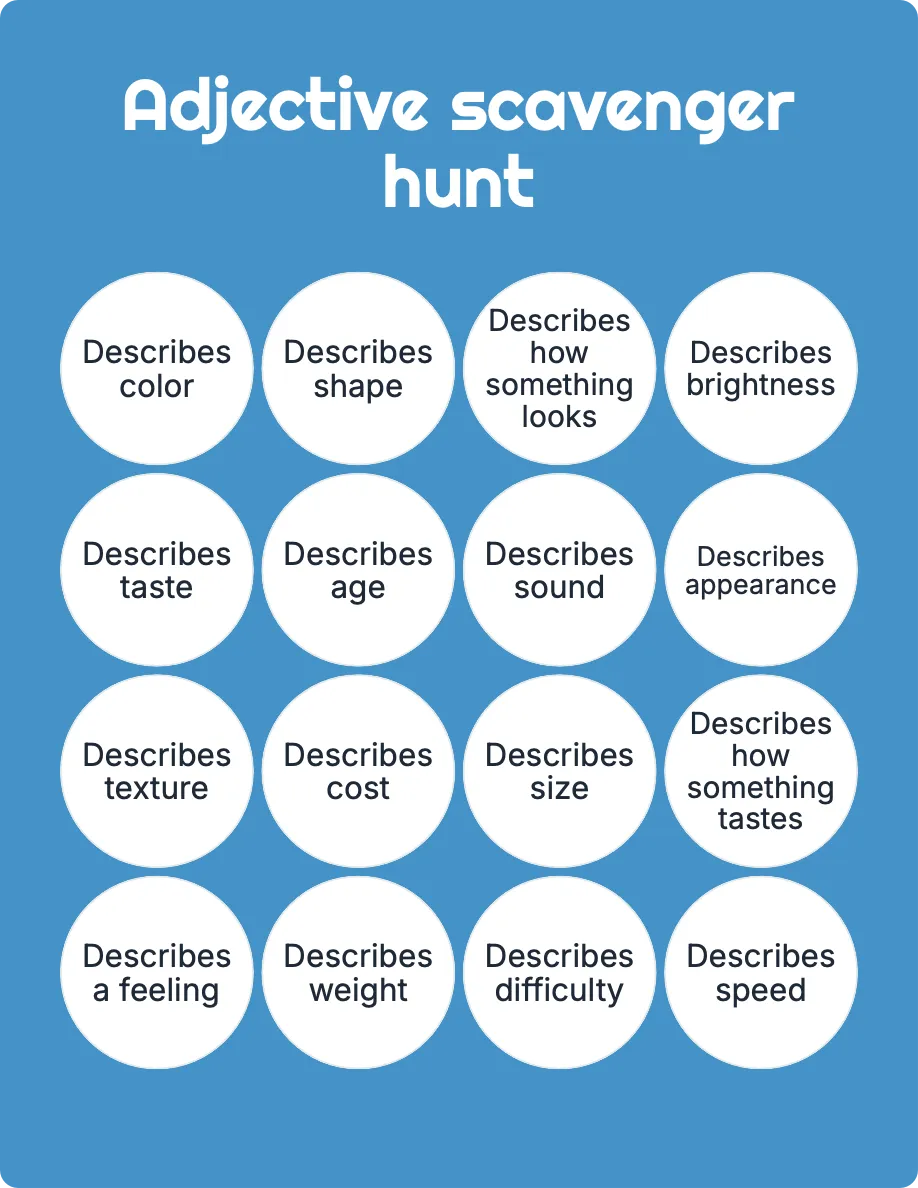
Adjective scavenger hunt bingo
12+Intermediate
How to organize a scavenger hunt bingo game
A scavenger hunt card only works when its items are possible and appropriate in the chosen location. Start with the setting, not the prize. Then decide what players must do when they find an item: see it, collect it, photograph it, or describe where it was. Those proof methods have different safety, privacy, and supervision needs.
Match the card to the setting
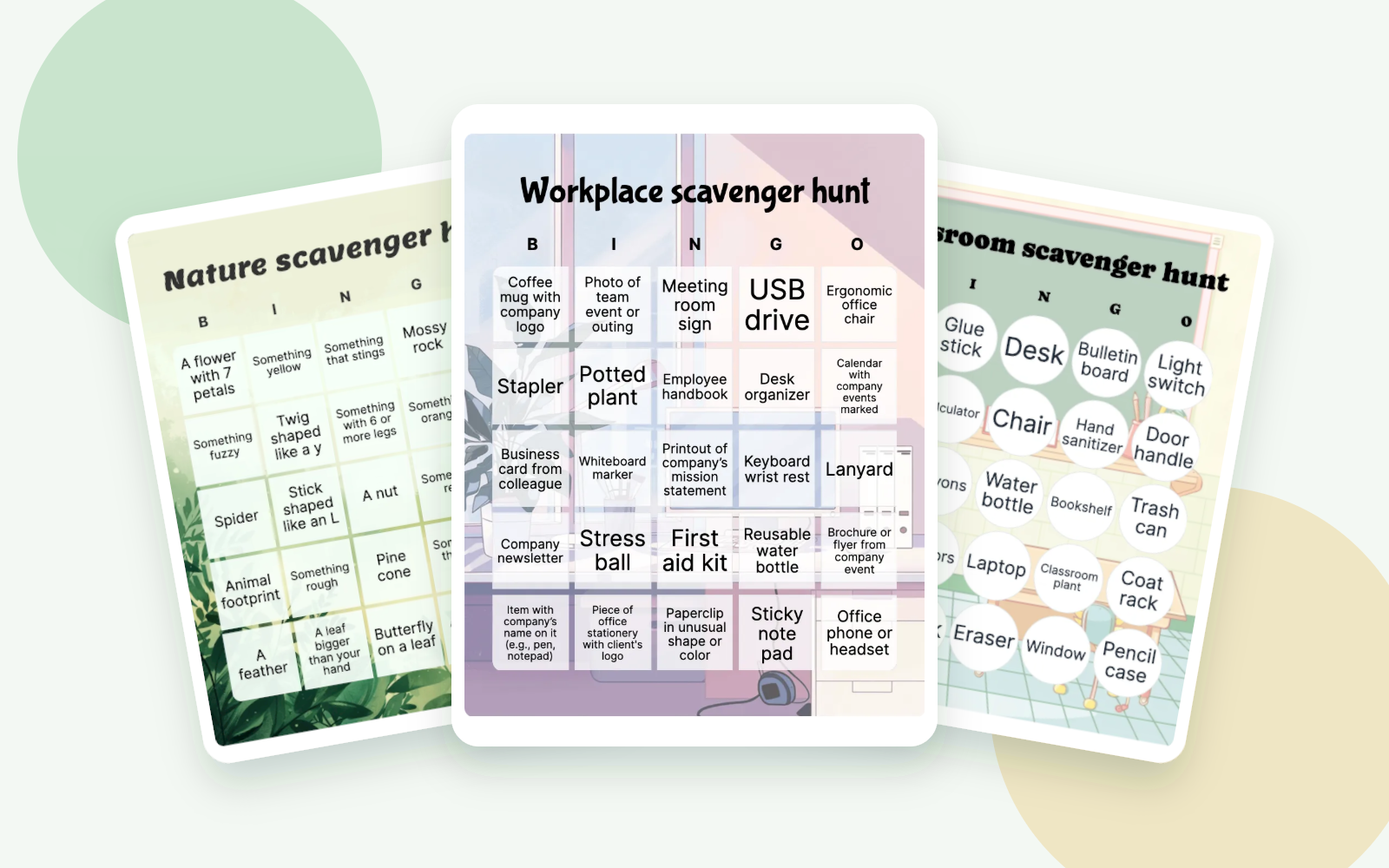
- Nature scavenger hunt includes a pine cone, something that can float, something orange, and a leaf bigger than your hand.
- Workplace scavenger hunt includes office items such as a company mug, stapler, business card, and newsletter.
- Classroom scavenger hunt uses familiar objects such as a whiteboard marker, notebook, backpack, ruler, and stapler.
Read every square in the real location before distributing cards. Replace objects that are unavailable, private, unsafe, or likely to disrupt other people. A classroom card should not send children into unsupervised areas, and a workplace card should not require access to restricted rooms, personal desks, or confidential information.
Choose one proof method
Seeing an item is the simplest method. Players can mark it and note where it appeared. Collecting gives the host physical proof, but it is unsuitable for property that is not theirs, living things, protected natural objects, or items that should stay in place. Photography can work, but it should not include strangers, children, private screens, documents, number plates, home addresses, or confidential workplace material.
A description can replace a photograph when privacy matters. For example, a player can name the room and object without moving it. Tell everyone what evidence is acceptable before the hunt begins.
Set boundaries before players leave
Define the permitted rooms, path, outdoor area, or neighborhood boundary. Identify roads, car parks, water, steep ground, weather risks, private property, and off-limits spaces. Children need supervision appropriate to the location and activity. Nobody should approach a stranger, enter a vehicle, climb, trespass, or travel farther because a square is difficult.
For outdoor hunts, leave natural objects where they are unless collecting is expressly allowed. Do not disturb wildlife or damage plants. Use an observation or description instead.
Create a fair substitute rule
Some items will be missing, seasonal, or inaccessible. Prepare neutral substitutes before play, or allow the host to replace an item with another object of the same broad type. Apply the same replacement to every card affected. A player should never have to choose between safety and completing a line.

Brief the group
- State the boundary and finish time.
- Explain whether players work alone, in pairs, or in teams.
- Show the approved proof method.
- List off-limits areas and behaviors.
- Explain the substitute and winner-check rules.
- Prepare readable cards with the printing guide.

Check the result
At the finish time, bring everyone back before checking claims. Ask the player or team to identify each item in the winning line and show the agreed evidence. Do not reward unsafe or privacy-invading evidence. If two teams finish together, use the announced tie rule rather than adding an unplanned race.
Fix common problems
- An item cannot be found: use the prepared substitute or leave it unmarked.
- A photo includes private information: do not share it; use a description instead and remove it when appropriate.
- Players leave the boundary: stop their hunt and bring the group back together before resuming.
- The weather changes: end or move the activity rather than trying to finish the card.
Choose the setting, proof, boundary, and substitute rule before the first item is found.
Generate bingo cards,
your way
Unleash your creativity with our versatile generator that simplifies the creation of personalized cards featuring text, emojis, and images!
Create card
Frequently asked questions
Do players have to collect scavenger hunt items?
What should happen if an item is unavailable?
Can children play scavenger hunt bingo?
How do I check a scavenger hunt bingo winner?
You may also be interested in....
Not quite found the card you were looking for? Here are some similar categories that you may be interested in.