
Thanksgiving bingo
Thanksgiving bingo cards can be called, used to notice moments during a gathering, or opened as conversation prompts. Choose the participation style first, then review every square for the guests, traditions, food, privacy, and age range. Set the timing and substitutes before play, and make personal discussion optional. The game should fit around a gathering where people may celebrate differently.
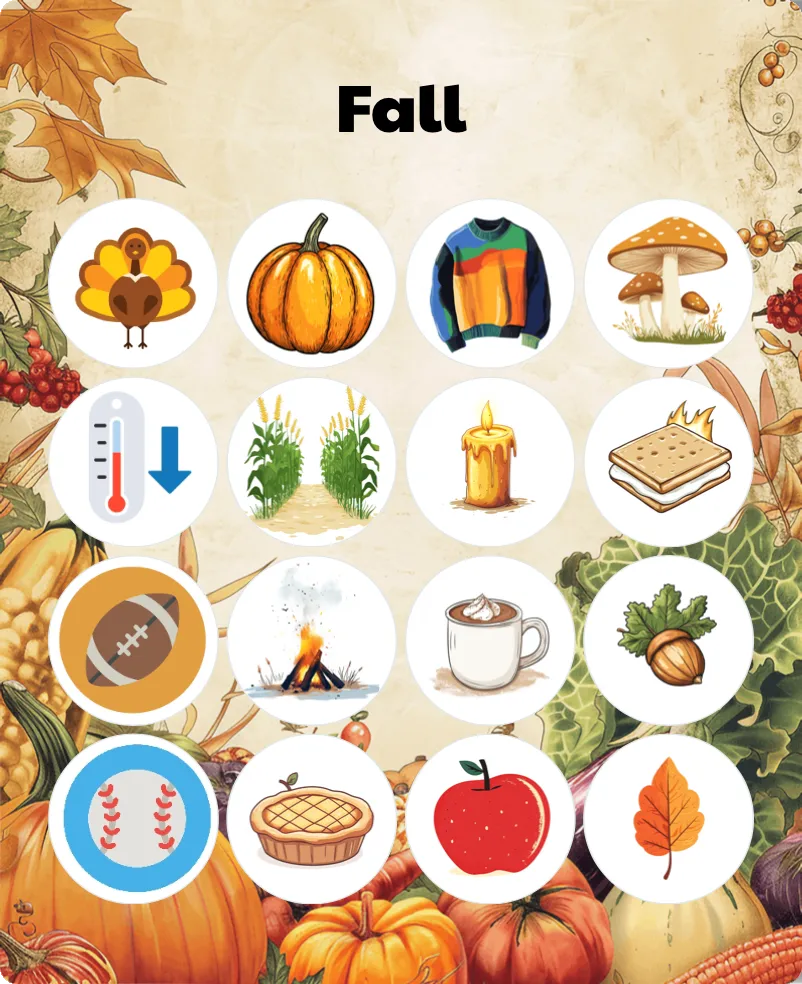
Fall / Autumn bingo
5+Easy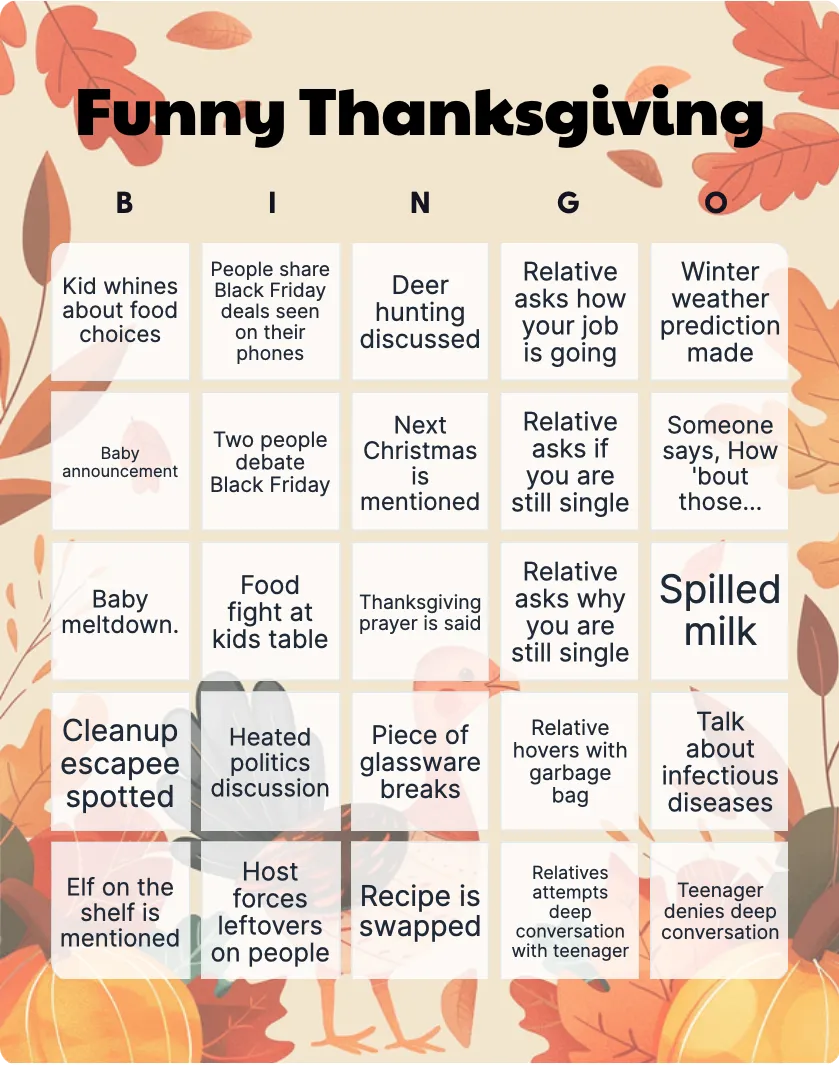
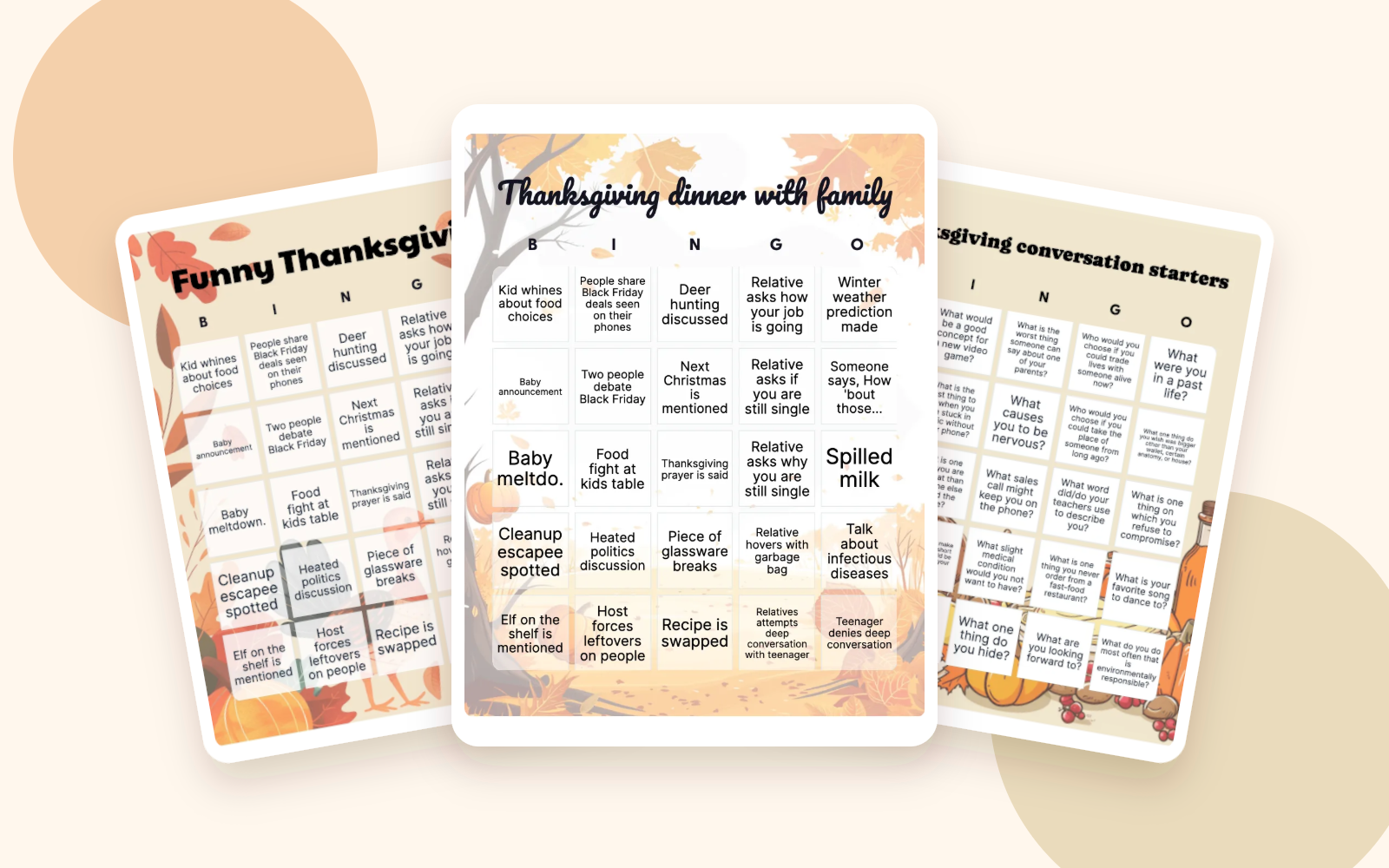
Funny Thanksgiving bingo
5+Easy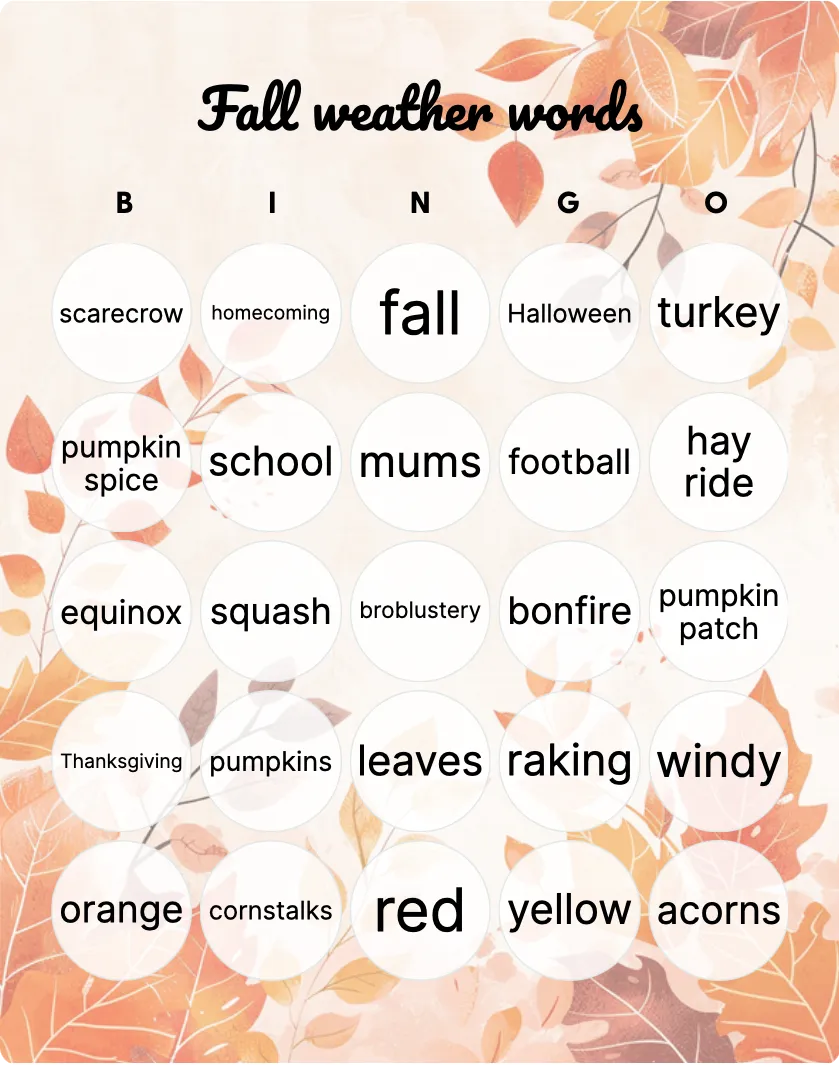
Fall weather words bingo
5+Easy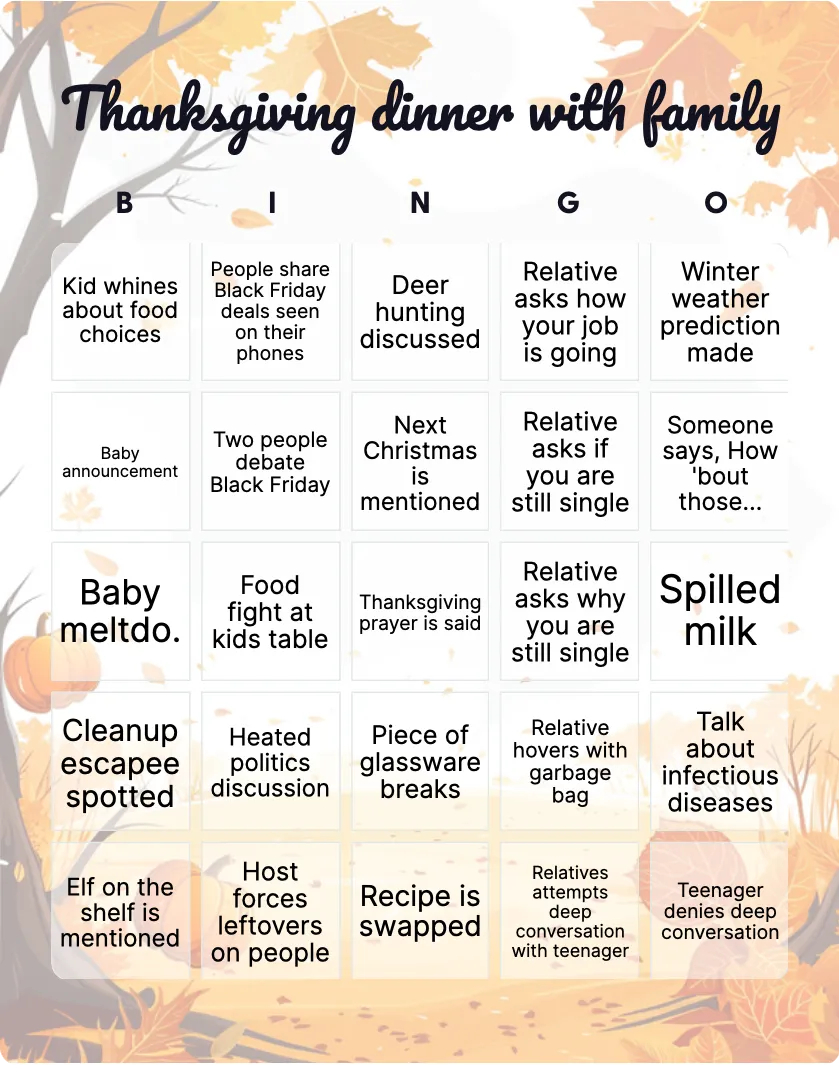
Thanksgiving dinner with family bingo
5+Intermediate
Harvest bingo
Thanksgiving images bingo
Thanksgiving conversation starters bingo
5+Easy
Thanksgiving image bingo
5+Easy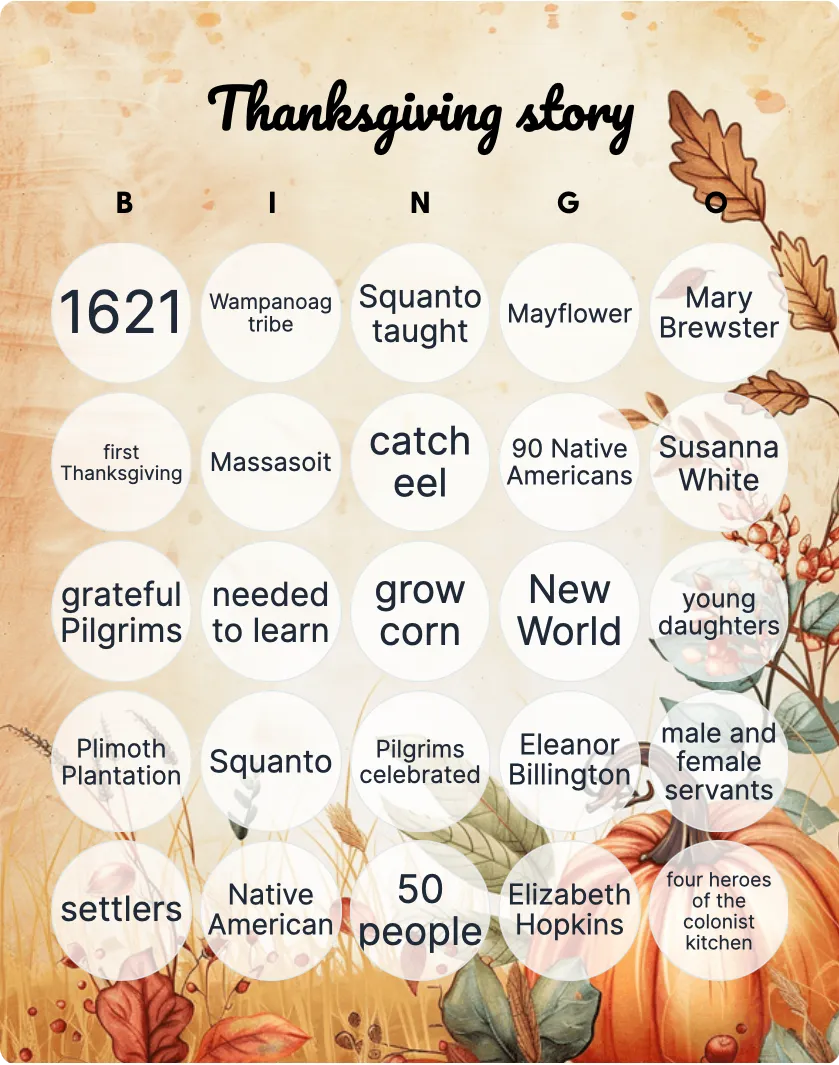
Thanksgiving story bingo
5+Intermediate
How to plan a Thanksgiving bingo game
Thanksgiving bingo works in more than one way. A host can call themed words, players can mark moments they notice during a meal, or a group can use squares as conversation prompts. These formats need different rules. Decide how people will participate before choosing a card, then review the content for the actual gathering.
Choose the kind of round
- Funny Thanksgiving and Thanksgiving dinner with family contain moments that may be observed during a gathering, including children, cleanup, and family interactions.
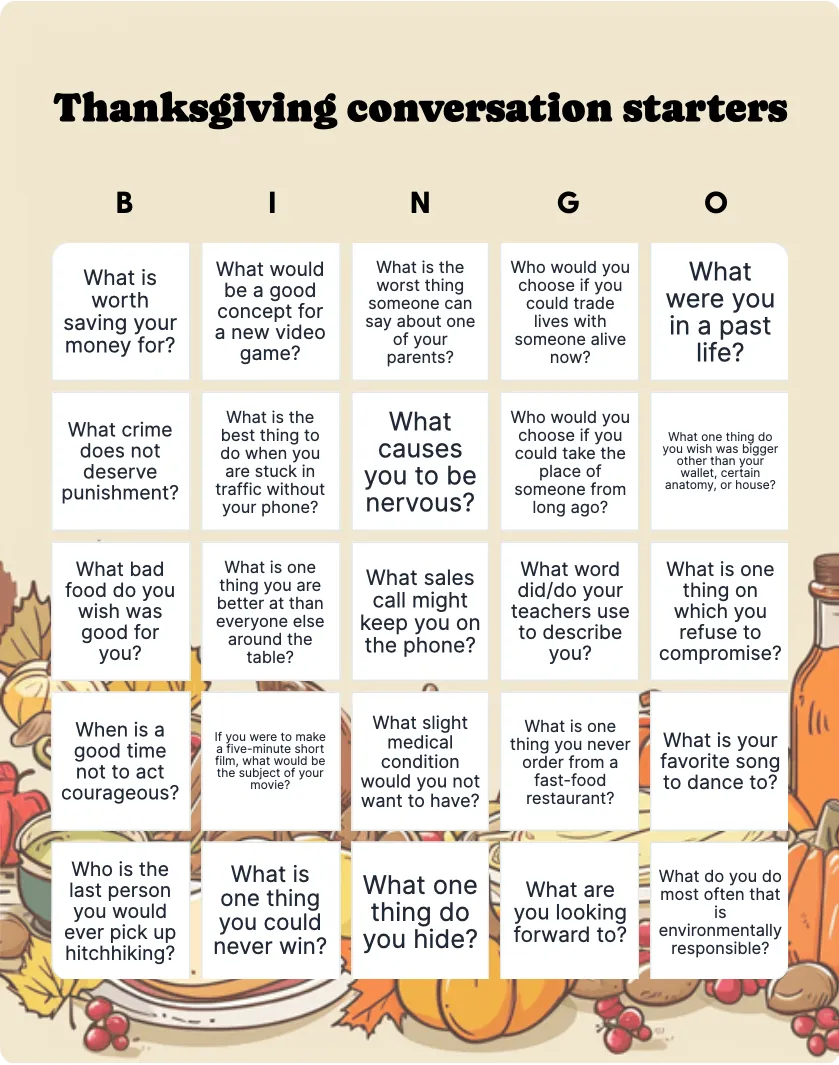
- Thanksgiving conversation starters asks people to discuss topics rather than wait for a caller.
- Other cards in the collection use foods, seasonal words, pictures, or called prompts.
An observed card can run quietly in the background. A called card needs a complete call list. A conversation card changes the focus of the gathering, so it needs more careful review and an easy way to skip a prompt.
Called word or picture bingo
Prepare the complete call list and use the same name for each word or image throughout the round. This is the most contained format when the host wants a clear start and finish. Check that the words and pictures match what the players can read or recognize, rather than assuming every seasonal reference is familiar.
Observed family moments
Decide which part of the gathering is in scope and whether a moment needs to be witnessed by the host. Players should notice what happens naturally, not create a mess, interrupt a conversation, involve a child, or direct another guest’s behavior to complete a square. Avoid turning ordinary family interactions into jokes at one person’s expense.
Conversation prompts
Choose prompts people can answer at the level they prefer. A favorite dish or seasonal activity gives room for a short answer, while questions about money, crime, health, relationships, or difficult memories can put a guest on the spot. Replace those subjects before play, not after somebody has been asked to answer.
Review every square for the people attending
Families and friendship groups celebrate in different ways. Remove squares that assume a particular meal, relationship, household role, religious practice, or family structure. If a card refers to children, alcohol, money, crime, health, politics, or private family experiences, decide whether it belongs in this gathering at all.
Conversation prompts should always be optional. A player may pass without explaining why, and nobody should have to reveal financial, legal, medical, or relationship information to stay in the game. Replace personal prompts with lighter topics such as favorite foods, seasonal activities, films, music, or something a guest is looking forward to.

Choose a time that does not disrupt the gathering
A called round works best in a clear time slot, such as while guests arrive or after the meal. Observation cards can begin at arrival and end at an agreed time. Conversation cards can be placed on the table, but the host should explain that they are invitations, not requirements.
Avoid making food preparation or cleanup harder. If people are cooking, carrying hot dishes, supervising children, or helping a guest, let them join later or play in pairs. Keep cards and markers away from serving areas.
If the gathering includes several households or traditions, describe the card as one set of possible prompts rather than a checklist of what Thanksgiving should look like. Remove items that will never occur and use shared details from this event instead.
Set simple rules
- Explain whether squares are called, observed, or discussed.
- Choose one line, four corners, or another visible winning pattern.
- For observed play, decide whether a moment counts once and whether it must be witnessed by more than one person.
- For conversation play, allow a pass or substitute on every turn.
- Agree how a winning line will be checked.
Prepare printed cards with the printing guide. If guests are joining remotely, follow the online play guide and explain how remote players can report observed moments or claim a line.
Use substitutions without singling anyone out
Replace unsuitable squares before distributing cards. If a problem appears during play, offer the same neutral substitute to everyone rather than asking one player to defend a personal boundary. For example, replace a private question with “name a favorite autumn activity” or replace an unavailable dish with a visible color or table item.
Prizes are optional. If you use them, avoid food unless dietary needs are known, and keep the value modest so a disputed square does not become a high-stakes argument. Recognition, choosing the next pattern, or being the next caller can be enough.
When children are playing, use short rounds and familiar pictures or words. Do not make them comment on adult conversations, family disagreements, alcohol, or private behavior. A child who joins late or needs help can play with a trusted adult without changing the rules for everyone else.
Resolve unclear moments
- Two people interpret a square differently: the host applies the same ruling to every card, then rewrites the square for another round.
- A prompt feels personal: skip or replace it immediately, without asking for an explanation.
- Someone joins late: give them a fresh card or pair them with another player rather than filling squares retrospectively.
- The round outlasts the gathering: announce a shorter pattern or a fixed end time before continuing.
The useful version of Thanksgiving bingo fits around the gathering rather than taking it over. Choose the participation style, check the prompts, and make skipping easy before the first card is handed out.
Generate bingo cards,
your way
Unleash your creativity with our versatile generator that simplifies the creation of personalized cards featuring text, emojis, and images!
Create card
Frequently asked questions
Should Thanksgiving bingo be called or played by observation?
How should I use Thanksgiving conversation cards?
When is the best time to play Thanksgiving bingo?
Can remote guests join Thanksgiving bingo?
Blog
45 fun Thanksgiving family games
Spice up Thanksgiving with 45 family-friendly games, from Pumpkin Pass to Corn Maze Challenge, ensuring a holiday brimming with laughter, bonding, and unforgettable memories!
You may also be interested in....
Not quite found the card you were looking for? Here are some similar categories that you may be interested in.